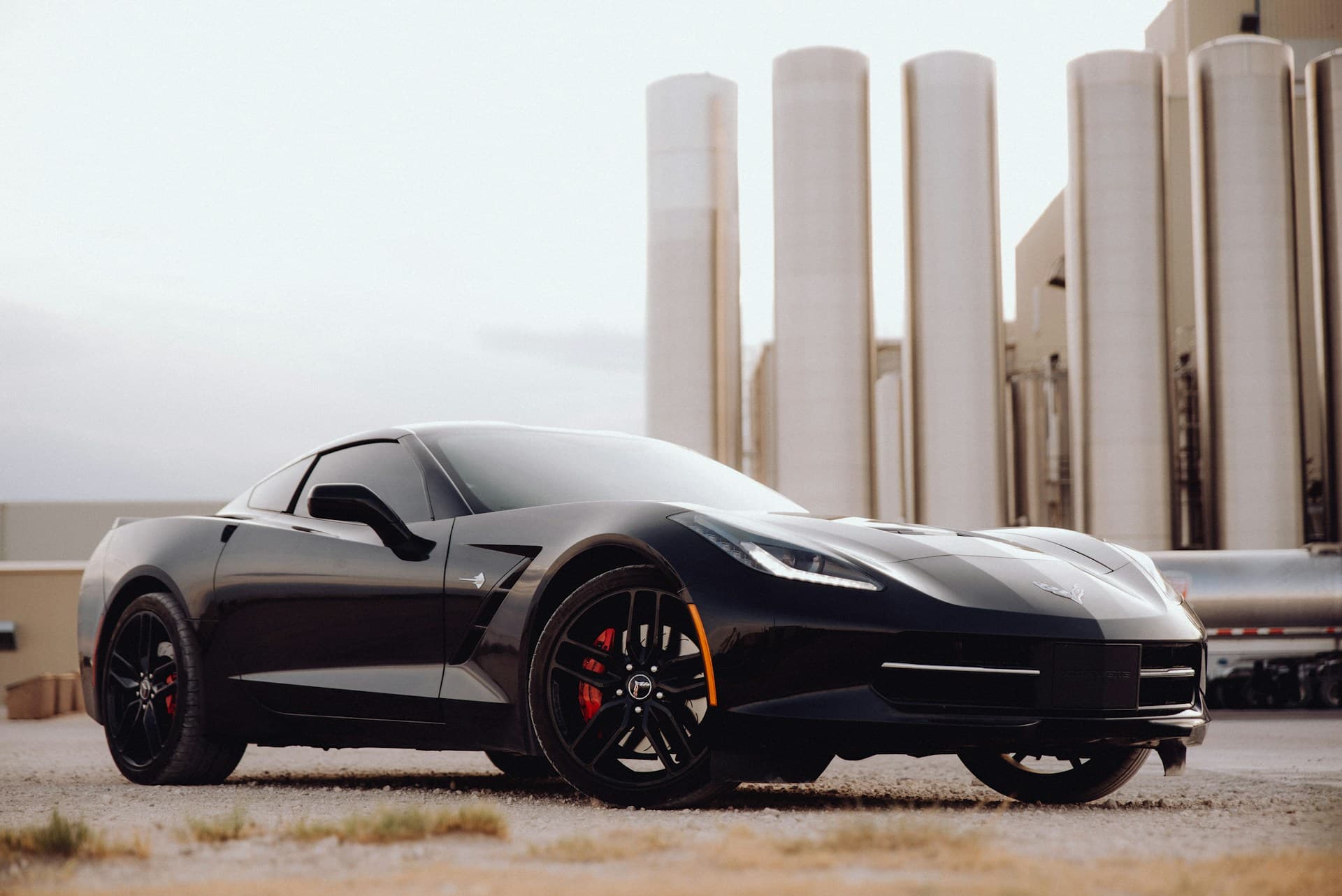
Chevrolet Corvette (C6) Buyer's Guide: Common Problems and Reliability (2005–2013)
Chevrolet · Corvette · C6 · 2005–2013
Complete used C6 Corvette buyer's guide covering 2005-2013 common problems: harmonic balancer failure, LS7 valve guide wear, column lock issues, torque tube noise, dash delamination. Covers pricing, maintenance costs, and which model year to buy.
 Mirko7 min read
On this page8 sections
The C6 Corvette delivers near-supercar performance at a fraction of the price, but its ownership costs are driven by a few specific failure points. For the 2005-2013 generation, the primary risk signal is harmonic balancer separation — a progressive failure that can leave you stranded and cost $1,000+ to repair. Understanding these issues before you buy is key to getting a C6 that's a joy to own rather than an expensive project.
Generation Overview
Production spanned 2005-2013 with two major engine cycles: the 6.0L LS2 (2005-2007) and the 6.2L LS3 (2008-2013), both producing 400-430 hp. The 7.0L LS7 Z06 arrived in 2006, adding 505 hp. Key mid-cycle changes include a TR6060 manual transmission (2008+), revised cylinder heads for the LS3, and updated interior trim. The C6 shed weight versus the C5 and introduced a fixed-roof coupe body style alongside the convertible and Z06. The Grand Sport was introduced in 2010, combining Z06 suspension and brakes with the LS3 engine.
Pricing Guide
Here is what you can expect to pay for a C6 Corvette in 2026: 2005-2007 (LS2, base): $15,000-$22,000 2008-2013 (LS3, base): $20,000-$30,000 Grand Sport (2010-2013): $28,000-$38,000 Z06 (2006-2013): $30,000-$50,000 (LS7 cars) ZR1 (2009-2013): $50,000-$75,000
Manual transmission cars generally command a premium over automatics. Low- mileage, well-documented examples at the higher end of the range are almost always worth the premium over neglected, higher-mileage cars. The C6 represents exceptional performance value, especially at the lower end of the price range.
Known Issues
Harmonic Balancer Failure
The rubber-bonded harmonic balancer delaminates, causing wobble and eventual separation. Left unchecked, it can damage the crankshaft keyway and front seal. Affects all LS2, LS3, and LS7 engines from 2005-2013. Severity: Medium to High. What to watch for: visible wobble at idle (look at the crankshaft pulley while the engine is running), chirping noise from the front of the engine, or a check engine light from a misfire. Replacement costs $800-1,500 depending on whether the crankshaft bolt and seal are also replaced. This should be considered a "when, not if" maintenance item on any C6.
Column Lock Issue (2005)
A flawed electronic steering column lock mechanism can engage while driving or refuse to disengage, disabling the steering wheel. This affects only 2005 models built before a service campaign. Severity: High if it locks at speed; Medium otherwise. What to watch for: a "Pull Key, Wait 10 Seconds" message on the DIC. A bypass module ($50-200) is the permanent fix. If you're looking at a 2005, confirm the column lock bypass has been installed.
LS7 Valve Guide Wear (Z06)
The titanium intake valves in the 7.0L LS7 wear the bronze valve guides prematurely, leading to valve drop and catastrophic engine failure. This is a materials issue — not mileage-dependent — and affects all 2006-2013 Z06s. Severity: Critical. What to watch for: top-end ticking at idle, excessive valve clearance on inspection ($300-500 for a leak-down test). Replacement heads or upgraded guides cost $3,000-6,000. If you're looking at a Z06, this should be your primary concern — insist on valve guide inspection results.
Torque Tube Bearing Noise
The torque tube connecting the engine to the transaxle contains two bearings that dry out over time. Noise presents as a growl or rumble under light throttle. Affects all C6 variants. Severity: Low to Medium (if ignored, can damage the tube housing). What to watch for: metallic whirring that rises with speed in gear but stops in neutral. Bearing replacement is $1,000-1,500. Early diagnosis makes this a manageable repair.
Dash Delamination
The adhesive holding the dashboard skin to its foam backing fails, causing bubbles and peeling — particularly in high-heat climates. Affects 2005-2009 models (revised adhesive in 2010+). Severity: Low (cosmetic). What to watch for: raised bubbles or loose sections near the windshield base. Replacement dash costs $800-1,200. Many owners live with it or use a dash cover.
Sub-Variant Issues
Z06: Rear Differential Cooling
Track use overheats the differential in Z06s lacking the optional cooler (most 2006-2008 cars). Prolonged heat breaks down fluid and can damage the clutch pack. If you're looking at a Z06 for track duty, this adds another layer of risk. What to watch for: whining from the rear under hard cornering or fluid leaks from the vent tube. An aftermarket cooler costs $500-800 installed.
Coupe: Targa Top Peeling (Delamination)
The composite roof panel can separate from its inner structure — not a paint peel, but a structural bond failure. Affects 2005-2007 coupes primarily. Severity: Medium (panel may detach at speed). What to watch for: visible gap or movement along the front edge when pressing down. Replacement panel costs $1,500-2,500 (GM part 15848483). Many owners replace it with a fixed roof or a transparent top.
Maintenance Costs
- Oil changes: $60-100 (7-8 quarts of synthetic) - Transmission fluid change: $200-350 - Differential fluid change: $100-200 - Harmonic balancer replacement: $800-1,500 - Tires: $1,000-1,800 per set (wide, high-performance tires required) - Brake pads: $300-700 per axle
Annual maintenance averages $1,000-1,500 for a well-maintained C6. The harmonic balancer is the most common recurring expense, and tires are the biggest predictable cost. Compared to European sports cars of the era (Porsche 997, BMW M3), the C6 is significantly cheaper to maintain.
Which Model Year to Buy
The 2008-2013 LS3 cars offer the best combination of power and reliability. The LS3's improved cylinder heads and larger displacement provide more power without the LS7's valve guide concerns. The 2008+ models also benefit from the TR6060 manual transmission (stronger than the earlier T56), updated interior trim, and the revised harmonic balancer design, which still fails but less frequently. For the best value, a 2008-2009 LS3 coupe with the manual transmission is the sweet spot of the C6 generation.
Frequently Asked Questions
Is the C6 Corvette reliable?
The C6 is reliable for a high-performance sports car, but it's not as reliable as a Toyota Camry. The LS engines are fundamentally robust, and the manual transmissions are strong. The main issues are the harmonic balancer (every C6 will eventually need one), and on the Z06, the LS7 valve guide wear. A well-maintained C6 with the LS3 engine and manual transmission can be a very reliable daily driver.
Should I buy a C6 or C7 Corvette?
The C7 is more modern, faster, and more livable day-to-day, but costs significantly more. The C6 offers better value for the performance dollar. If your budget is under $30,000, the C6 is the clear choice. If you can spend $35,000+, the C7's improvements (aluminum frame, better interior, newer technology) are worth considering. Both generations share similar maintenance costs, though the C7's A8 transmission adds a specific concern the C6 doesn't have.
What's the most reliable C6 engine?
The LS3 (2008-2013) is the most reliable C6 engine. It has none of the LS2's early issues (throttle actuator, column lock concern on 2005), none of the LS7's valve guide problems, and none of the LS9's supercharger complexity. The LS3 is simple, powerful, and well-proven. For maximum reliability, pair it with the manual transmission.
What should I check on a C6 test drive?
Start the engine cold and check for harmonic balancer wobble at idle. Listen for torque tube bearing noise (growl under light throttle). Test the AC thoroughly. Check for dashboard delamination. On the test drive, feel for transmission smoothness through all gears. Check for differential noise on tight turns. A $200-300 pre-purchase inspection at a Corvette specialist is highly recommended and should include a compression test and leak-down test.
This page covers what's documented about the C6 generally. The car you're looking at has its own history — its own mileage, service gaps, and previous owners. A Squeezed report pulls the exact risk profile for your specific year, trim, and spec. Run a report.
FAQ
What are the most common problems with the Chevrolet Corvette (C6) (2005-2013)?
Harmonic balancer failure and torque tube bearing noise are the most common driveline complaints. Z06 buyers should pay specific attention to LS7 valve guide wear, which is the most serious issue on the platform.
Is the Chevrolet Corvette (C6) (2005-2013) reliable?
The base LS-powered C6 is mechanically simple and generally dependable with normal maintenance. The Z06's LS7 is higher-strung and needs a compression/leak-down check before purchase, since valve guide wear is a known, expensive failure mode.
Are there Chevrolet Corvette (C6) years to avoid?
LS7 valve guide wear affects Z06 models broadly across 2006-2013, not a single isolated year — a pre-purchase inspection matters more than model year for that engine. The 2005 model year also had an early column lock issue worth asking about specifically.