How Title Washing Hides Flood-Damaged Cars, and How to Check (2026)
2026 went until October without a hurricane. Then Isaias hit Florida on the same night Tropical Storm Rachel's surf flooded streets in Newport Beach, California. Here's how flooded cars get back onto lots with clean-looking titles, the free tools that catch most of them, and the red flags to watch.
 Mirko10 min read
On this page11 sections
For most of this year, the Atlantic hurricane season looked like a non-event. On September 21 it became the first season since 1914 without a hurricane that late, according to Wikipedia's season summary. Then Isaias became the season's first hurricane on October 8, tying 1905 for the latest on record, and came ashore near Destin, Florida, on the night of October 9 as a Category 2 storm. Parts of the Florida Panhandle and Alabama got more than 12 inches of rain, and the Florida National Guard pulled four people from a partially submerged truck, Weather.com reported.
The same day, on the other side of the country, swells from Tropical Storm Rachel pushed seawater into Newport Beach, California. About ten blocks of the Balboa Peninsula flooded, knee-deep in places, several cars got stuck and had to be towed, and the city declared a local emergency, NBC Los Angeles reported. Waves also battered beachfront homes in Long Beach. And nine days earlier, a record downpour in Omaha and Lincoln, Nebraska, left cars submerged in parking lots and on city streets.
None of those cars are for sale yet. Some will be. The National Insurance Crime Bureau warned on August 19 that flood-damaged vehicles "frequently re-enter the used car market following major disasters, sometimes hundreds of miles from where the flooding occurred." Carfax estimated about 530,000 flood-damaged vehicles were on US roads as of August 2025, before this year's storms.
Most of those cars have a paper trail. The problem is that buyers look at the title, not the trail.
Where this year's flood cars came from
| Event | Dates | Where | Flooding |
|---|---|---|---|
| Tropical Storm Arthur | June 17-18 | Landfall near Galveston, Texas | Almost 30 inches of rain in parts of Louisiana, a 1-in-1,000-year event; flash floods in Texas; more than $1 billion in damage |
| Tropical Storm Bertha | July 19-24 | Louisiana and the Texas-Louisiana border | Mostly storm surge and high surf |
| Northeast flash flooding | Summer | Connecticut, Massachusetts, New Jersey, New York, Rhode Island | Flash floods that prompted a AAA Northeast warning on August 4 |
| Tropical Storm Edouard | Aug. 31-Sept. 3 | Landfall at Johnson Bayou, Louisiana | Up to 17.71 inches of rain; roads flooded in eastern Texas |
| Connecticut flood | Sept. 13 | Fairfield, New Haven and Litchfield counties | Damage severe enough to qualify for SBA disaster loans |
| Nebraska and Iowa flash floods | Sept. 30-Oct. 1 | Omaha, Lincoln and southwest Iowa | 3 to 10 inches of rain; Lincoln's wettest day on record; cars submerged in Omaha, Millard and Lincoln |
| Tropical Storm Rachel surf | Oct. 9 | Newport Beach and Long Beach, California | Seawater flooded about ten blocks of the Balboa Peninsula; cars stuck and towed |
| Hurricane Isaias | Oct. 9-10 | Landfall near Destin, Florida | Up to 12.97 inches of rain in Alabama; flash flooding across the Florida Panhandle and the Southeast |
Atlantic storm details from Wikipedia's 2026 Atlantic hurricane season summary.
Cars flooded in June are reaching the market now. Salvage auctions, repairs and re-titling take weeks to months, so fall and early winter are when flood cars from summer storms show up for sale, often far from Texas, Louisiana or the Northeast. The cars from Nebraska, Newport Beach and Isaias will follow over the winter and into spring.
Why the California flooding matters
The Newport Beach flood was small next to a hurricane, but it's the kind that slips through. Seawater is worse for a car than rainwater: salt speeds up corrosion in wiring, connectors and brake parts, and it keeps working for months after the car dries out. A car that sat in a flooded street for an hour can run fine today and start throwing electrical faults next spring.
It's also the kind of flood least likely to leave a record. A parked car that took water on a residential street may never reach an insurer, especially if the owner carries only liability coverage. And a flood car doesn't stay local. A Southern California car can be listed in Arizona or Nevada, and a car flooded by Isaias in Florida can end up on a lot in California.
How a flooded car gets back on a lot
There are two routes, and only one leaves an obvious record.
The insured route. An insurer declares the car a total loss, pays the owner, takes the title and sells the car at a salvage auction. The state brands the title, and the insurer reports the total loss to national databases. A buyer at the salvage auction may dry it out, clean it up and resell it. This car has a record, and the tools below will usually find it.
The uninsured route. A car with only liability coverage, or whose owner never files a claim, doesn't get totaled by anyone. No insurer reports it, no brand goes on the title, and the owner can sell it privately or trade it in with a clean title. No database can tell you about these cars. Only an inspection can.
This route is bigger than it sounds. Flood damage is covered only by comprehensive insurance, which is optional, as AAA reminded Florida drivers after Isaias. Insured or not, the damage is often hidden: after the Omaha storm, one owner told WOWT her newer car wouldn't start and "the fob won't work."
How title washing works
"Title washing" means moving a car's paperwork until the brand that should warn you disappears from the title in your hand. It works because states brand titles differently.
States don't agree on what a brand means. One state may brand a car "salvage" at a damage threshold where another brands nothing, and not every state uses a separate "flood" brand, as the Justice Department's NMVTIS program notes. A car branded "flood" in one state can be re-titled in another with only a "salvage" or "rebuilt" brand, or none, and the new paper title shows only what the new state recorded.
What makes washing harder now is the National Motor Vehicle Title Information System. States, insurers, junk and salvage yards all report to it, and once a state applies a brand, NMVTIS keeps it in the vehicle's history. That makes it "extremely difficult (if not impossible)" to wash a flood brand from the national record. The catch: the paper title can look clean while the NMVTIS record shows the brand. Buyers who only look at the title never see it.
Free and low-cost ways to check
| Tool | What it shows | Cost |
|---|---|---|
| NICB VINCheck | Whether participating insurers, covering more than 92% of the market, have reported the car as a total loss or stolen and unrecovered | Free |
| Carfax flood check | Flood damage reported to Carfax | Free |
| NMVTIS report | Title brands from every reporting state, total-loss reports, latest odometer readings | A few dollars from an approved provider |
| Full vehicle history report | Title history, accidents, service records and ownership by state | Paid |
NICB's VINCheck processed nearly 3 million checks through July 31, 2026, and was created after Hurricane Katrina for exactly this problem. Run it and an NMVTIS report on any car you're serious about. Together they cost less than lunch. Our guide to checking a VIN for free walks through each tool, and our guide to reading a vehicle history report explains what to look for in the ownership history.
Red flags in the paperwork
- A new title issued recently, in a different state, after a storm. A car titled in Texas or Louisiana in the spring and re-titled elsewhere in August or September deserves a closer look. So does a car registered this fall in the Florida Panhandle, coastal Alabama, Omaha, Lincoln or the Newport Beach area that turns up with a new title in another state this winter.
- A title brand in NMVTIS that isn't on the paper title. That's what washing looks like.
- A total-loss record with no brand on the current title.
- Ownership in a flood area during a flood event, even without a brand. Uninsured flood cars leave no brand, but the history still shows where the car was registered.
- A price well below similar listings, with a vague story about why the seller is selling.
Red flags on the car
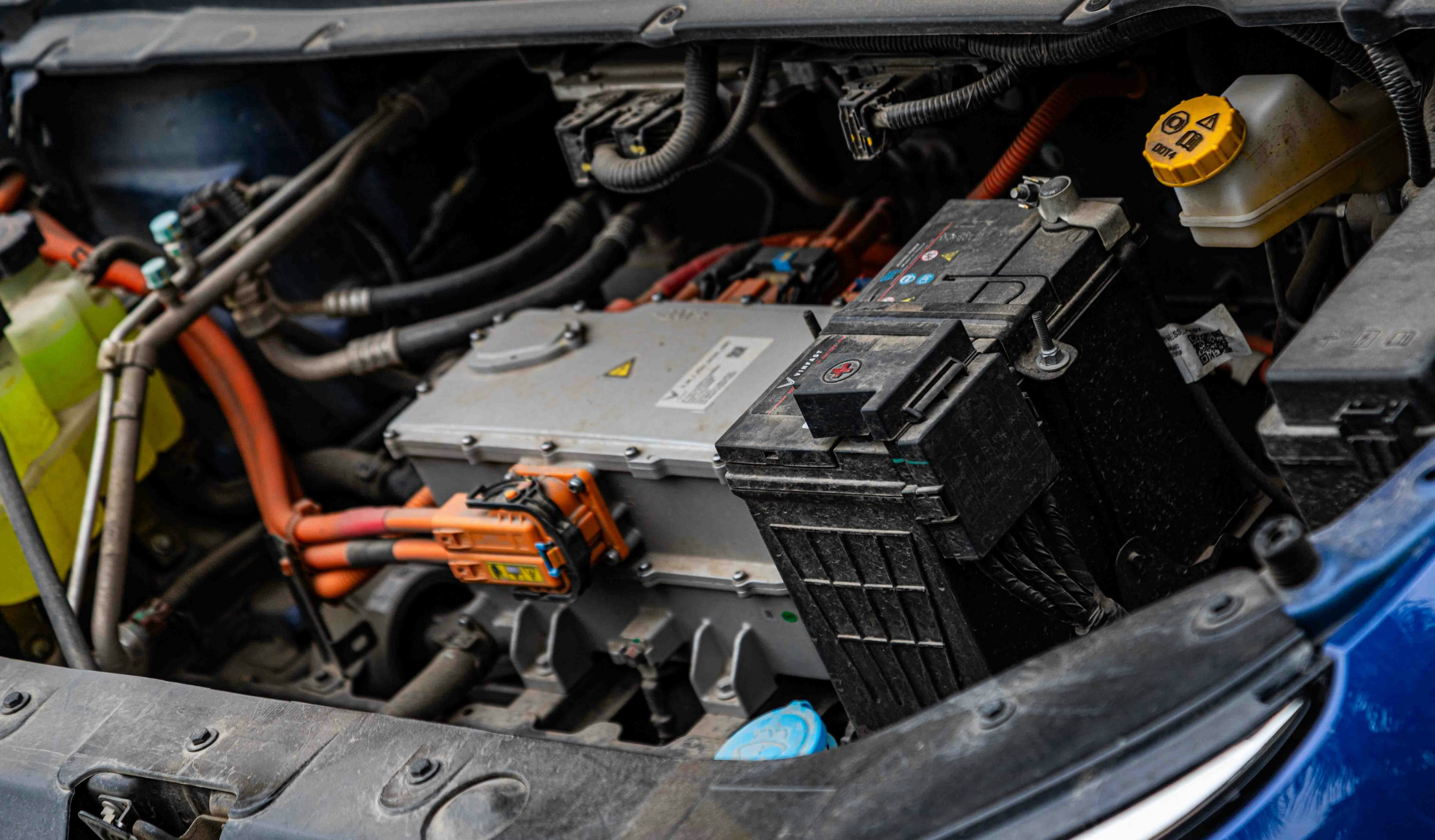
Floodwater damages the electrical system, engine, transmission, brakes and safety systems, and some of that damage takes months to show. "A flood-damaged vehicle may look perfectly normal on the outside, but hidden damage can create serious safety hazards and expensive repair bills," said David J. Glawe, NICB's president and CEO.
The warning signs NICB and AAA Northeast list:
- A musty or damp smell, or heavy air freshener covering one
- Water stains, silt or mud under the carpet, in the trunk and under the spare tire
- Rust or corrosion on seat rails, door hinges, and bolts under the dash
- Brittle or corroded wiring under the dashboard
- Fog or moisture inside headlights, taillights or the instrument cluster
- Upholstery or carpet that doesn't match the rest of the interior, or is newer than the car
- Electrical problems: flickering lights, dead switches, warning lights
Our flood damage detection guide covers each check in detail, including how to do the smell test and where to look for a mud line.
If a car shows any of these signs, have it inspected before you go further. A pre-purchase inspection is the only way to catch an uninsured flood car, and a good shop knows where silt and corrosion hide.
What to do if you already bought one
If you discover flood damage after buying, act quickly. Document the damage with photos and a mechanic's written findings. If a dealer sold it without disclosing a flood brand, contact your state attorney general's consumer protection office and the motor vehicle agency. Many states require dealers to disclose branded titles. If the car has a flood brand in NMVTIS that wasn't disclosed, that record is your evidence.
Final thoughts
A late hurricane season didn't mean a dry year. Arthur, Edouard and the Northeast floods put cars underwater over the summer, and some of them are for sale now with titles that look clean. Isaias, the Nebraska floods and the seawater in Newport Beach just added more, and those cars will reach the market over the coming months. The records exist for most of them. Check NICB VINCheck and NMVTIS before you pay, and let an inspection catch the ones no database knows about.
This is the research you do before you make an offer. Run a Squeezed report on the car you're looking at: it takes about a minute and shows the known issues for that year, trim and engine, open recalls, and what a fair price looks like.
Sources
- National Insurance Crime Bureau, flood-damaged vehicle warning, via MOTOR (August 19, 2026)
- AAA Northeast, AAA Northeast Warns Consumers About Flood-Damaged Cars Entering the Used Car Market After Flash Flooding (August 4, 2026)
- U.S. Department of Justice, National Motor Vehicle Title Information System: Consumers
- National Insurance Crime Bureau, VINCheck
- Carfax, How to Avoid Flooded Cars
- Wikipedia, 2026 Atlantic Hurricane Season (retrieved October 11, 2026)
- NBC Los Angeles, Newport Beach flooding (October 9, 2026)
- Weather.com, Hurricane Isaias live updates (October 10, 2026)
- CBS12, AAA urges Floridians to document storm damage, avoid scams following Hurricane Isaias (October 10, 2026)
- National Weather Service Omaha/Valley, Flooding of September 30, 2026
- WOWT, Flood-damaged cars face uncertain recovery after Omaha storm (October 2, 2026)
- 06880, Disaster Aid Approved For September Flood (October 6, 2026)
FAQ
What is title washing?
Title washing is re-titling a car in a different state so that a brand like "flood" or "salvage" disappears from the paper title. It works because states brand titles differently. The federal NMVTIS database keeps a vehicle's brand history across states, so an NMVTIS report usually reveals a washed brand even when the title looks clean.
How can I check if a used car was in a flood?
Run the VIN through NICB VINCheck and the Carfax flood check, both free, and buy an NMVTIS report for a few dollars. Then inspect the car for a musty smell, silt under the carpet, corrosion under the dash and moisture in the lights, and get a pre-purchase inspection. Uninsured flood cars leave no record, so only an inspection catches them.
Where did flood-damaged cars come from in 2026?
Tropical Storm Arthur brought almost 30 inches of rain to parts of Louisiana in June, Tropical Storm Edouard flooded eastern Texas in early September, and flash floods hit the Northeast over the summer. Record rain flooded Omaha and Lincoln, Nebraska, on September 30. On October 9, surf from Tropical Storm Rachel flooded Newport Beach, California, and Hurricane Isaias, the season's first hurricane, came ashore near Destin, Florida.