CVT Transmission Problems: Used Cars to Research Before You Buy
CVTs deliver great fuel economy, but a few models have turned them into five-figure repair risks. Which used cars have the worst CVT reputations, which brands got it right, and how to spot a failing CVT on the test drive before you buy.
 Mirko4 min read
On this page6 sections
The continuously variable transmission is one of the biggest reliability variables in the used market. Done well, a CVT is smooth and efficient and lasts the life of the car. Done poorly, it's a $4,000 repair waiting at 90,000 miles. The difference isn't the technology itself — it's which manufacturer built it. Here are the CVTs to research hard before you buy, and how to catch a dying one before it becomes yours.
What a CVT Is and Why It Fails Differently
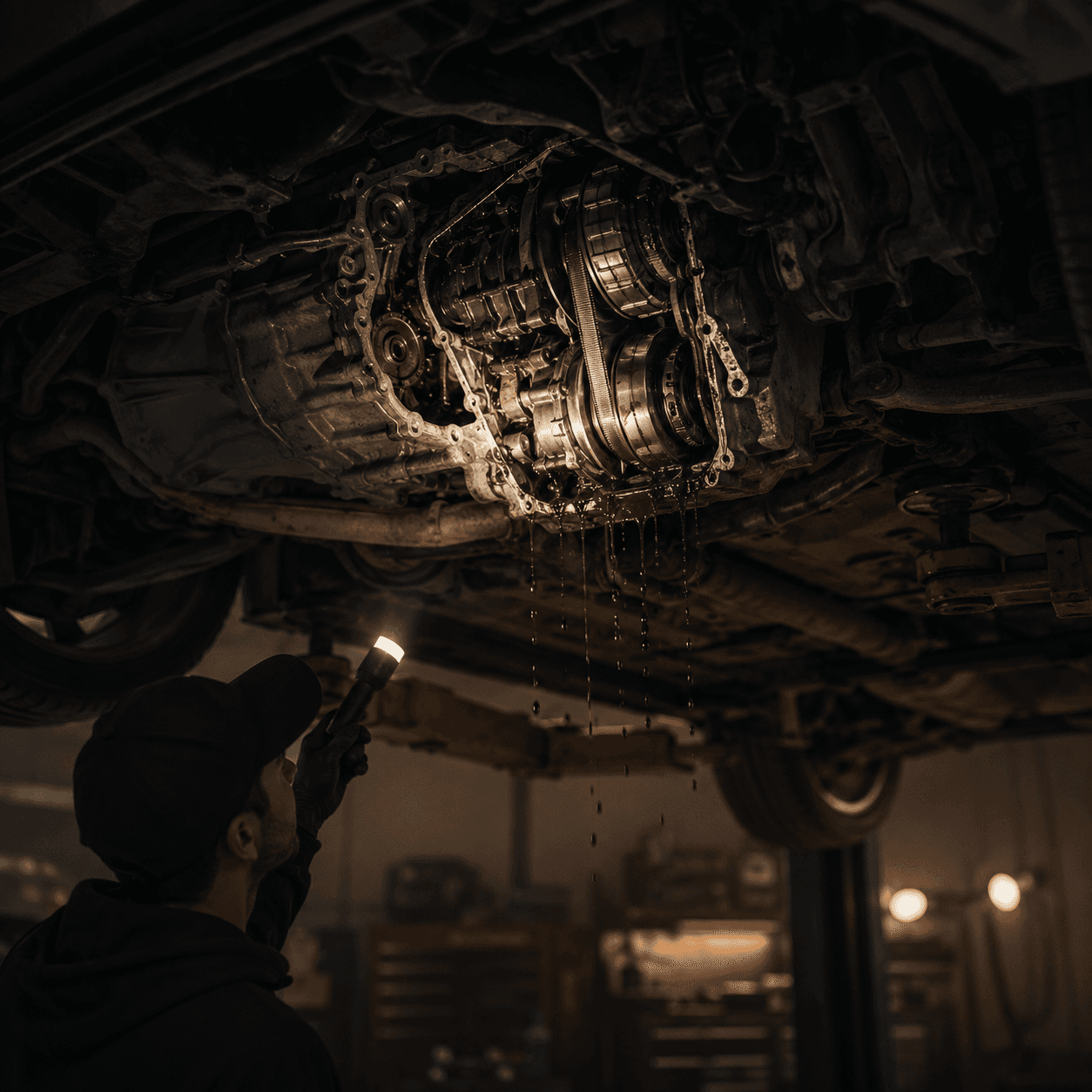
A conventional automatic shifts between fixed gears. A CVT uses a steel belt or chain running between two variable-width pulleys, so it has an infinite range of ratios and no "shifts" at all. That's what makes it efficient. But it also means the whole system relies on precise belt tension, clean fluid, and tight heat control. When the fluid degrades or the unit overheats, the belt and pulleys wear, and a worn CVT usually can't be rebuilt cheaply — it's often a full replacement. That's why CVT failures tend to be expensive rather than gradual.
The Models With the Worst CVT Reputations
The name that comes up most is Nissan. Its CVTs — supplied by Jatco — have the longest track record of complaints across the Altima (2013–2018), Sentra, Rogue, and Murano, with a failure window that often opens between 80,000 and 100,000 miles. Symptoms include shuddering, whining, and overheating that triggers limp mode. The related Jatco units in some Jeep Compass and Patriot models earned similar reputations. None of these are guaranteed to fail, but they carry meaningfully higher risk and demand documented fluid service.
The Brands That Got CVTs Right
CVT is not a dirty word — plenty are excellent. Toyota's CVTs, including those in the Corolla and RAV4, add a physical first gear for launch and have proven very durable. Honda's CVTs are generally reliable (the separate 1.5L turbo oil-dilution issue covered in our Toyota vs. Honda comparison is an engine matter, not a transmission one). Subaru's Lineartronic improved substantially after its early years. The lesson: judge the CVT by the specific model and generation, not by the fact that it's a CVT.
How to Spot a Failing CVT on the Test Drive
A CVT gives warning signs if you know what to feel for:
- Shuddering or judder at steady, low speeds (around 15–40 mph) — the classic early symptom.
- Hesitation or a "rubber band" surge when you accelerate, where engine revs climb but speed lags.
- Whining or droning that rises with RPM more than a healthy CVT's normal hum.
- Delayed engagement when shifting from park to drive or reverse.
- A burnt smell from the fluid, or overheating warnings on a longer drive.
Test on an incline and in traffic, not just a smooth straight road. Any of these on a Nissan or Jatco-equipped model should stop the deal until a specialist inspects it.
What a CVT Replacement Actually Costs
This is why it matters: a CVT replacement typically runs $3,000–$8,000 depending on the vehicle, and on an older economy car that can exceed the car's value. Even preventive fluid changes get skipped because many owners were told the fluid is "lifetime" — it isn't. A car with no record of CVT fluid service is a car whose transmission history is a blank you're inheriting. Before you buy any CVT-equipped model, confirm the fluid was serviced on schedule and research that specific model's failure pattern — our list of the most reliable used cars of 2026 is a good place to sanity-check your shortlist.
This is the research you do before you make an offer. Run a Squeezed report on the car you're looking at — it takes about a minute and costs less than a tank of gas.
FAQ
Which used cars have the worst CVT problems?
Nissan's Jatco-supplied CVTs have the longest history of complaints across the Altima, Sentra, Rogue, and Murano, often in an 80,000–100,000-mile window. Related units in some Jeep Compass and Patriot models earned similar reputations. None are guaranteed to fail, but they carry higher risk and need documented fluid service.
Are all CVT transmissions unreliable?
No. Toyota's CVTs (with a physical launch gear), Honda's CVTs, and Subaru's later Lineartronic units have proven durable. Reliability depends on the specific manufacturer, model, and generation — not on the fact that a car uses a CVT.
How can I tell if a CVT is failing on a test drive?
Watch for shuddering at low steady speeds, a rubber-band surge where revs climb but speed lags, whining or droning that rises with RPM, delayed engagement from park to drive, or a burnt fluid smell. Test on an incline and in traffic, and stop the deal if any appear until a specialist inspects it.
How much does a CVT replacement cost?
A CVT replacement typically runs $3,000–$8,000 depending on the vehicle, which can exceed the value of an older economy car. Because worn CVTs often can't be rebuilt cheaply, prevention through on-schedule fluid changes matters, and a car with no CVT service record is a real risk.