Best High-Mileage Used Cars (100K+ Miles): What to Buy and How to Find a Good One in 2026
A 100,000-mile car isn't what it used to be. Modern engines, transmissions, and rust protection routinely push past 200,000 miles with proper maintenance. Here are the best high-mileage used cars to target in each segment, plus the exact checklist you need to avoid buying someone else's expensive problem.
 Mirko24 min read
On this page13 sections
The 100,000-mile mark used to be a death sentence. Old conventional wisdom said once a car crossed six figures on the odometer, it was time to unload it before the expensive stuff let go. That advice is stuck in the 1990s.
Modern cars — especially the ones engineered for longevity — routinely last 200,000 miles and beyond. A well-maintained 2015 Toyota Camry with 120,000 miles has more usable life ahead of it than a neglected 2019 Nissan with 60,000. The number on the dashboard tells you less than the stack of service receipts in the glovebox.
Consumer Reports recently published their own guide to high-mileage cars and confirmed what our data has shown across thousands of vehicle inspections: the 100,000-mile threshold is a maintenance milestone, not a mechanical expiration date. The expensive items that come due around this mark — timing belt, water pump, transmission service, spark plugs, coolant hoses — are predictable costs you can budget for, not hidden catastrophes.
This guide covers the models actually worth buying at high mileage, the ones to avoid, and the inspection checklist that separates a deal from a mistake. If you're shopping on a budget and 100,000+ miles is your reality, here is how to do it without getting burned. And if you haven't yet, start with our primer on how many miles is too many for a used car — it covers the baseline framework this guide builds on.
Why 100,000 Miles Isn't What It Used to Be
Three things changed in the last twenty years that made high-mileage cars a viable buy:
Better metallurgy and tolerances. Engine blocks, piston rings, bearings, and cylinder walls are machined to tighter specifications than they were in the 1980s or 1990s. Modern synthetic oils also do a dramatically better job of reducing wear over the long term. The result: an engine that would have been burning oil at 90,000 miles in 1995 is still sealing cleanly at 180,000 miles today.
Electronic engine management. Computers constantly adjust fuel mixture, timing, and idle. This means the engine spends more time running at its optimal air-fuel ratio and less time running rich (washing down cylinder walls and diluting oil). It also means misfires, knock, and lean conditions are caught immediately rather than silently damaging the engine over thousands of miles.
Improved rust protection. Galvanized panels, better undercoating, and sealed cavities mean cars from the 2010s onward don't rust out the way they used to. A 2012 Corolla driven in the rust belt will have far less structural corrosion than a 1992 Corolla with the same mileage. This matters because a car can be mechanically perfect but unroadworthy from rot — and modern cars solve that.
The caveat, and it is a real one: the stuff around the engine (transmission, suspension, cooling system, electronics) can still fail expensively. A modern engine might run for 250,000 miles, but the 10-speed automatic bolted to it or the variable-valve-timing actuator on top of it might not. That is why model selection matters more at high mileage than it does at 30,000 miles.
What Changes at 100,000 Miles
Before we get to the models, here is what realistically changes on a car once it crosses 100,000 miles. These are the costs you need to budget for, and they are why the best high-mileage buys are the ones where the seller has already done this work.
Timing belt or chain service. If the engine uses a timing belt (most Honda V6s, many Subarus, older Toyotas), it is due around 90,000–105,000 miles. Cost: $800–$2,500 depending on the engine. If it snaps on an interference engine, the engine is destroyed. If it uses a timing chain and has a known tensioner issue (looking at you, BMW N20 and Audi 2.0T), this is the mileage where it can start rattling and needs attention.
Transmission fluid service. This is the single most neglected maintenance item on high-mileage cars. A transmission that has never had its fluid changed is far more likely to fail than one serviced every 60,000 miles. CVTs are especially sensitive — the Nissan Altima CVT failure window typically opens between 80,000 and 120,000 miles. A transmission replacement costs $4,000–$7,000.
Water pump and cooling system. Many manufacturers pair the water pump replacement with the timing belt service (they are often driven by the same belt). On engines where the water pump is buried behind the timing cover (BMW inline-6s, Audi 2.0Ts, Toyota 2GR-FE V6s), replacing it is a thousand-dollar job. If the car overheats from a failed water pump, you are looking at a head gasket or warped head — $3,000–$6,000.
Spark plugs and ignition coils. Most modern cars use iridium spark plugs good for 100,000–120,000 miles. If they haven't been changed, you will need to do it. On a Toyota four-cylinder, this costs about $150. On a BMW inline-6 or a Porsche Macan, it costs $800–$1,200 because the intake manifold has to come off.
Suspension bushings and struts. Rubber components degrade with time and heat cycles, not just miles. A 10-year-old car with 100,000 miles likely needs struts and lower control arm bushings. On a Lexus RX or Toyota Camry, this is a manageable $1,200–$1,800. On a European SUV with air suspension, it can run $3,000–$6,000. Our guide to the hidden costs of owning a used car covers what these items do to your budget.
Fluid flushes across the board. Coolant, brake fluid, differential and transfer case oil (on AWD/4WD vehicles), and power steering fluid all have service intervals most owners ignore. A high-mileage car that has only seen oil changes is a car with deferred maintenance.
How to Read a High-Mileage Car's Maintenance Records
The single most important factor in whether a high-mileage car is a good buy is not the model — it is the maintenance history. Here is exactly what to look for when the seller hands you the folder of receipts (and walk away if they have no receipts).
Oil changes every 5,000–7,500 miles. Gaps of more than 10,000 miles between oil changes mean sludge buildup, especially on turbocharged engines. On a 150,000-mile car, 30 oil changes should be documented. Not 15. Thirty.
Transmission fluid change documented. One fluid change between 60,000 and 100,000 miles cuts the failure rate roughly in half versus a transmission that was never touched. Two changes (at 60K and 120K) is ideal. This matters more for CVTs and modern 8+ speed automatics than for old 4-speed slushboxes.
Timing belt / water pump receipt. If the car has a timing belt engine and is over 100,000 miles, the belt should already be done. If it hasn't, deduct $1,500 from your offer immediately. If the seller can't confirm whether it has a belt or chain, that is a red flag — check our pre-purchase inspection guide for how to identify it.
Coolant changes every 30,000–60,000 miles. Neglected coolant becomes acidic and eats gaskets and heater cores. A car with original coolant at 120,000 miles has a much higher chance of a heater core failure ($1,000+) or water pump seal leak.
Brake fluid changes every 2–3 years. Brake fluid absorbs water over time, which corrodes calipers and ABS modules from the inside. This is the most commonly ignored fluid, and a high-mileage car with original brake fluid often needs calipers soon.
Spark plugs at 100,000 miles. If the car has 120,000 miles and the plugs were done at 100K, that is a good sign the owner followed the schedule. If there is no record, expect to replace them within the first month of ownership.
If the seller has all of this documented, you are looking at a car that was maintained by someone who understood what they owned. If they have nothing, assume every single item is overdue and budget accordingly. Our guide to what Carfax doesn't tell you explains why a clean vehicle history report is only part of the picture — it may not include independent shop work or DIY maintenance.
Best High-Mileage Sedans
Sedans are the sweet spot for high-mileage buying because depreciation hits them hardest and the best examples — Toyota, Honda, Mazda — are engineered for longevity. You can find a genuinely good sedan with 120,000 miles for well under $10,000 that will run another 100,000 miles with routine maintenance.
Toyota Camry (2012–2017, XV50)
The Camry is the default answer for a reason. The 2.5L four-cylinder and 6-speed automatic are proven to 250,000 miles with basic maintenance. The main high-mileage watch-items are torque converter shudder (feels like driving over rumble strips at highway speed) and oil consumption on the 2.5L, both documented in our Camry XV50 buyer's guide. The 2018+ XV70 is also an excellent high-mileage platform with an even better 8-speed automatic.
What to target: 2015–2017 four-cylinder with transmission fluid service documented. Budget $8,000–$12,000 for a clean example with 100,000–130,000 miles.
Honda Accord (2013–2017, 9th Gen)
The 2.4L four-cylinder Accord with the CVT is a 200,000-mile car. The CVT in the Honda is significantly more reliable than the Nissan unit — Honda builds their own CVTs and they hold up well. The V6 model uses a traditional 6-speed automatic and is also durable, though the VCM (variable cylinder management) can cause oil consumption at high mileage. See the full breakdown in our 9th-gen Accord guide.
What to target: 2015–2017 four-cylinder EX or Sport trim. Budget $9,000– $14,000 for 100,000–130,000 miles. The four-cylinder avoids the V6's VCM issues entirely.
Toyota Corolla (2009–2019)
The Corolla is the lowest-cost high-mileage entry. The 1.8L engine is nearly indestructible — it is the same basic design Toyota used for nearly two decades. The 4-speed automatic in pre-2014 models is even more durable than the CVT in 2014+ models, though the CVT is fine if serviced. Our 10th-gen Corolla guide covers the specifics. You can find a clean Corolla with 150,000 miles for $5,000–$8,000 and drive it another 100,000 miles.
What to target: 2009–2013 (10th gen) with the 4-speed automatic. They are simpler and cheaper to maintain than newer ones.
Mazda6 (2014–2020)
The Mazda6 is the enthusiast's high-mileage sedan. The SkyActiv 2.5L engine and 6-speed automatic are robust, and the chassis holds up well. The main high-mileage items are rear shock mount failures (common around 60,000 miles, cheap to fix) and infotainment screen delamination. It is the best-driving sedan on this list and almost as reliable as the Camry. Cross-reference with our overall reliability rankings to see how it stacks up.
What to target: 2016–2020 Grand Touring with the 2.5L. Budget $10,000– $14,000 for 80,000–110,000 miles.
Honorable Mention: Lexus ES 350 (2007–2018)
The Lexus ES is a Camry underneath with better sound insulation, nicer materials, and a quieter ride. The 3.5L V6 (2GR-FE) is one of Toyota's best engines and easily goes 250,000 miles. The main cost at high mileage is the water pump (embedded in the timing cover, $1,000–$1,500 job). A 2013–2015 ES 350 with 120,000 miles can be found for $13,000–$17,000 — our Lexus RX guide covers the same 2GR-FE engine used in the ES.
Best High-Mileage SUVs
SUVs cost more at any mileage, but the right models hold up as well as their sedan counterparts. The key is avoiding the expensive suspension and transmission repairs that plague less-durable platforms.
Toyota RAV4 (2013–2018, 4th Gen)
The 2.5L four-cylinder and 6-speed automatic in the non-hybrid RAV4 is a proven combination. The main high-mileage watch-items are torque converter shudder (same issue as the Camry, $1,500–$2,500 to fix) and oil consumption on the 2AR-FE engine above 80,000 miles. The 2016+ hybrid version uses an e-CVT that is more reliable than the 6-speed automatic — our 4th-gen RAV4 guide has the details.
What to target: 2016–2018 hybrid with documented maintenance. A 2016 hybrid with 120,000 miles runs $13,000–$17,000 and is one of the most reliable high-mileage SUVs you can buy. The fifth-gen (2019+) is also excellent but commands a premium.
Honda CR-V (2015–2020, 4th/5th Gen)
The naturally aspirated 2.4L CR-V (2015–2016) is the high-mileage sweet spot. It avoids the oil-dilution issues of the 1.5L turbo in the 2017–2020 models. The CR-V's CVT is Honda-built and reliable if serviced. See our CR-V buyer's guide for what to inspect. A 2015 EX-L with 130,000 miles sells for $11,000–$15,000.
What to target: 2015–2016 with the 2.4L and CVT fluid changes documented. Budget $10,000–$14,000 for 120,000–150,000 miles. Avoid the 2017–2018 1.5L turbo unless you are in a warm climate where oil dilution is less of a factor.
Toyota Highlander (2008–2019)
The Highlander is the three-row SUV that refuses to die. The 3.5L V6 (2GR-FE/2GR-FKS) is bulletproof, and the 6-speed or 8-speed automatic (depending on year) is durable. Major high-mileage items are the water pump ($1,000–$1,500, buried in the timing cover) and rear main seal leaks. A 2014 Highlander with 150,000 miles can be found for $14,000–$18,000 and will easily hit 250,000.
What to target: 2014–2019 (3rd gen) with the V6. Avoid the 4-cylinder — it is underpowered and returns similar fuel economy. Check for water pump replacement records.
Honda Pilot (2009–2019)
The Pilot uses the same J35 V6 as the Accord and Odyssey. The main high-mileage concern is timing belt service ($800–$1,200, due every 105,000 miles) and VCM-related oil consumption. A 2016 Pilot EX-L with 130,000 miles sells for $12,000–$16,000.
What to target: 2016–2019 with the 9-speed automatic. Ensure the timing belt was done at 105,000 miles. A well-documented example is a strong high-mileage buy.
Lexus RX 350 (2010–2015, 3rd Gen)
The Lexus RX is the gold standard for high-mileage luxury crossovers. The 3.5L V6 and 6-speed automatic are the same bulletproof combination used across Toyota's lineup. At high mileage, the main costs are the water pump (same 2GR-FE timing-cover job) and suspension bushings. Read our Lexus RX 3rd-gen guide for what to inspect. Budget $14,000–$18,000 for a clean 2013–2015 with 120,000 miles.
What to target: 2013–2015 RX 350 (pre-facelift has slightly simpler electronics). Avoid the RX 450h at very high mileage unless the hybrid battery health report is available.
Toyota 4Runner (2003–present)
The 4Runner is the overlanding community's favorite for a reason: the 4.0L V6 (1GR-FE) and 5-speed automatic are famously durable. A 4Runner with 200,000 miles is considered barely broken in. The catch is that 4Runners command a massive premium — a 2010 SR5 with 180,000 miles can still sell for $15,000–$20,000. You pay for the reliability premium, but you do get it.
What to target: 2006–2013 with the 4.0L V6 (post-2005 fixes the head gasket issue of earlier years). Frame rust is the real killer — inspect the rear lower control arm mounts and spare tire carrier. Compare pricing against our used car depreciation guide to know if you're overpaying.
Best High-Mileage Trucks
Trucks are the most mileage-forgiving segment because they are engineered from the ground up for hard use. The best high-mileage trucks outlast almost every car — they just cost more to buy upfront.
Toyota Tacoma (2005–2023)
The Tacoma is the high-mileage king of midsize trucks. The 4.0L V6 (1GR-FE) in the 2005–2015 models is one of the most durable engines Toyota ever built. The 3.5L V6 (2GR-FKS) in the 2016–2023 models is also good but has a known automatic transmission programming issue (the "gear hunting" complaint) and occasional 3rd-gen specific issues covered in our Tacoma buyer's guide. The problem with the Tacoma, like the 4Runner, is resale value.
What to target: 2005–2015 4.0L V6 Access Cab or Double Cab. Frame rust is the critical issue — Toyota had a major frame replacement program for 2005–2010 models. If the frame was replaced under the recall, that is ideal.
Toyota Tundra (2007–2021)
The Tundra's 5.7L V8 (3UR-FE) is arguably the most durable mass-production truck engine of the last 20 years. It has no cylinder deactivation, no direct injection, no turbochargers — just a massive, simple V8 that makes reliable power. The 6-speed automatic is equally robust. A Tundra with 200,000 miles needs the same things any truck needs: suspension bushings, brakes, and fluid changes — but less frequently than most. Budget $15,000–$22,000 for a 2010–2013 with 150,000–200,000 miles. Check our guide on buying reliable used cars under $30,000 for alternatives at different price points.
What to target: 2007–2013 5.7L V8 (3UR-FE). The 4.6L V8 is also good but only slightly better fuel economy for noticeably less power. Check for frame rust and camshaft tower oil leaks (common past 150,000 miles).
Ford F-150 (2015–2020, 13th Gen) — 5.0L V8
The Ford F-150 is the best domestic high-mileage truck if you pick the right engine. The 5.0L V8 is the safe choice — the 3.5L EcoBoost has cam-phaser issues ($1,500–$3,000) that typically surface between 60,000 and 90,000 miles. The 5.0L has its own issues (oil consumption on some 2018–2020 models, and the 10-speed 10R80 transmission can exhibit harsh shifting), but it is generally more durable at high mileage. See our F-150 13th-gen guide. For earlier models, read the 12th-gen F-150 guide.
What to target: 2015–2017 F-150 with the 5.0L V8 and 6-speed transmission. Avoid the 10-speed in early 2017 models — it took Ford several years to work out the shifting logic. Later 2018+ models have the 10-speed but the programming is better.
Ram 1500 (2014–2018, DS)
The Ram 1500 with the 5.7L Hemi V8 and 8-speed ZF automatic is a strong high-mileage truck. The Hemi's main issues are exhaust manifold bolts (they snap, causing a ticking noise — $600–$900 to fix) and the cylinder deactivation system (lifters can fail, $2,500–$4,000 if it happens). The ZF 8-speed is one of the best automatics on the market and holds up well. See our Ram 1500 buyer's guide. A 2015 Ram 1500 Big Horn with 140,000 miles runs $13,000–$17,000.
What to target: 2015–2018 with the 5.7L Hemi and 8-speed. Avoid the 3.0L EcoDiesel at high mileage — the emissions equipment and CP4 fuel pump are expensive failure points.
Chevrolet Silverado 1500 (2014–2019, K2XX)
The Silverado's 5.3L V8 is dependable, but active fuel management (AFM) is the weak link. The AFM lifters can fail and take the camshaft with them ($3,000–$5,000 repair). The fix is an AFM delete when the engine eventually needs work — or buying one where the AFM was deleted already. The 6L80 transmission in these years can develop torque converter shudder. Our Silverado buyer's guide covers the specifics. A 2015 Silverado LT with 140,000 miles is typically $14,000–$18,000.
What to target: 2015–2017 with the 5.3L and documented transmission fluid changes. Budget $1,500 for an AFM disabler as a preventative measure.
Best High-Mileage Hybrids
Hybrids are the reliability sleeper pick for high-mileage buyers. The Toyota Hybrid Synergy Drive system used in the Prius, Camry Hybrid, RAV4 Hybrid, and Lexus RX 400h/450h has proven itself in taxi fleets and rideshare service worldwide. Many Priuses have passed 300,000 miles on original battery packs.
The main high-mileage hybrid consideration is battery degradation. A replacement hybrid battery costs $1,500–$4,000 (aftermarket options from Green Bean Battery and others are cheaper). The battery typically lasts 150,000–200,000 miles before noticeable degradation. A hybrid with 180,000 miles should be priced with the expected battery replacement in mind. Our guide to buying used EVs and hybrids covers the battery economics in detail.
The Toyota Prius (2009–2015, 3rd gen) is the high-mileage hybrid benchmark. The gen-3 Prius has a known head gasket issue on high-mileage examples (100,000+) and the brake actuator can fail ($1,500–$2,000 repair), but these are predictable costs rather than catastrophic failures. A 2012 Prius with 150,000 miles sells for $6,000–$9,000 and delivers 48 MPG.
The Camry Hybrid (2012–2017) uses the same hybrid system in a sedan package. It avoids the Prius's head gasket issue and has a more comfortable interior. A 2014 Camry Hybrid LE with 130,000 miles runs $10,000–$14,000 and should easily reach 250,000 miles.
The RAV4 Hybrid (2016+) combines the proven hybrid system with the popular SUV format. The cable corrosion issue on 2019–2023 RAV4 Hybrids in cold climates (where road salt is used) is a known problem — Toyota extended the warranty on the cable, so check if the fix was applied.
Models to Approach with Caution at High Mileage
Not every car is built for the long haul. Some models are engineered for performance, luxury, or low cost — and their high-mileage experience reflects that. Here are the models to research hardest before buying with 100,000+ miles.
German luxury sedans (BMW 3 Series, Audi A4, Mercedes C-Class). The engines and transmissions in these cars are often capable of 200,000 miles, but the stuff around them — cooling systems, oil separator diaphragms, valve cover gaskets, timing chain tensioners, electronic modules — fails earlier and costs more. Budget $2,000–$4,000/year in maintenance on a high-mileage German luxury car. Our E90 3 Series and F30 3 Series guides cover what to expect.
CVT-equipped Nissans (Altima, Sentra, Rogue, Versa). The Nissan CVT has a documented failure window between 80,000 and 120,000 miles. A replacement costs $3,500–$5,000. Some units fail earlier, some last longer, but buying a high-mileage Nissan with an original CVT is a bet against statistics. The Nissan Altima L33 guide covers the specifics. If you must buy one, insist on documented CVT fluid changes every 30,000 miles.
Ford Focus and Fiesta (2012–2019, DPS6 automatic). The DPS6 dual-clutch transmission in these cars is the most failure-prone transmission of the last 20 years. Shuddering, slipping, and complete failure are common. The average repair cost is $2,500–$4,500 — often more than the car is worth at high mileage. The manual transmission versions are fine. See the Focus/Fiesta DPS6 guide for the full story.
Range Rover and Land Rover (all models). Range Rovers with 100,000 miles are expensive to keep alive. Air suspension failures ($2,000–$4,000 per corner), timing chain issues on the 3.0L V6, cooling system leaks, and electrical gremlins are common. Budget $3,000–$6,000/year in maintenance on a high-mileage Land Rover.
Mini Cooper (2007–2013, R56 generation). The R56 Mini with the N12/N14 engine has a long list of high-mileage problems: timing chain tensioner failure (engine-destroying), carbon buildup on intake valves, thermostat housing leaks, and turbo failures. The later 2014+ F56 models with the B38 engine are better, but high-mileage Minis of any generation are expensive to maintain for what they are.
European luxury SUVs (Porsche Macan, BMW X5, Audi Q7). These drive beautifully when new but become expensive projects at high mileage. Budget $2,500–$5,000/year on a high-mileage European SUV.
Are Extended Warranties Worth It on a High-Mileage Car?
This is the question that comes up with every high-mileage purchase. Consumer Reports advises against extended warranties, and our data agrees: the average extended warranty costs $2,000–$4,000 and covers less than most buyers expect. High-mileage cars have more exclusions (pre-existing conditions, wear items, maintenance overlaps), and many warranty companies use high-mileage as a reason to deny claims.
If you are buying a $8,000–$12,000 high-mileage Toyota Camry, an extended warranty is almost certainly a bad deal. The car is unlikely to need a repair that exceeds the warranty cost. If you are buying a high-mileage European luxury car, a warranty from a reputable provider might make sense — but the premiums are often prohibitively high for cars over 100,000 miles.
The better approach: set aside the money you would have spent on a warranty into a dedicated repair fund. Our extended warranty guide breaks down the scenarios where a warranty makes sense (rare) and where it doesn't (most of the time).
How to Verify Mileage and Condition
Odometer fraud is more common on high-value, high-mileage vehicles. A car with 180,000 actual miles rolled back to 120,000 is worth significantly more — which means there is incentive to cheat. Here is how to verify the mileage on any high-mileage car before you buy.
Check the vehicle history report. A Carfax or AutoCheck report shows odometer readings recorded during state inspections, service visits, and registration renewals. Look for consistent, incremental increases. Discrepancies (jumping from 180,000 in 2023 to 120,000 in 2025) are fraud. Our guide to reading vehicle history reports walks through exactly what to check.
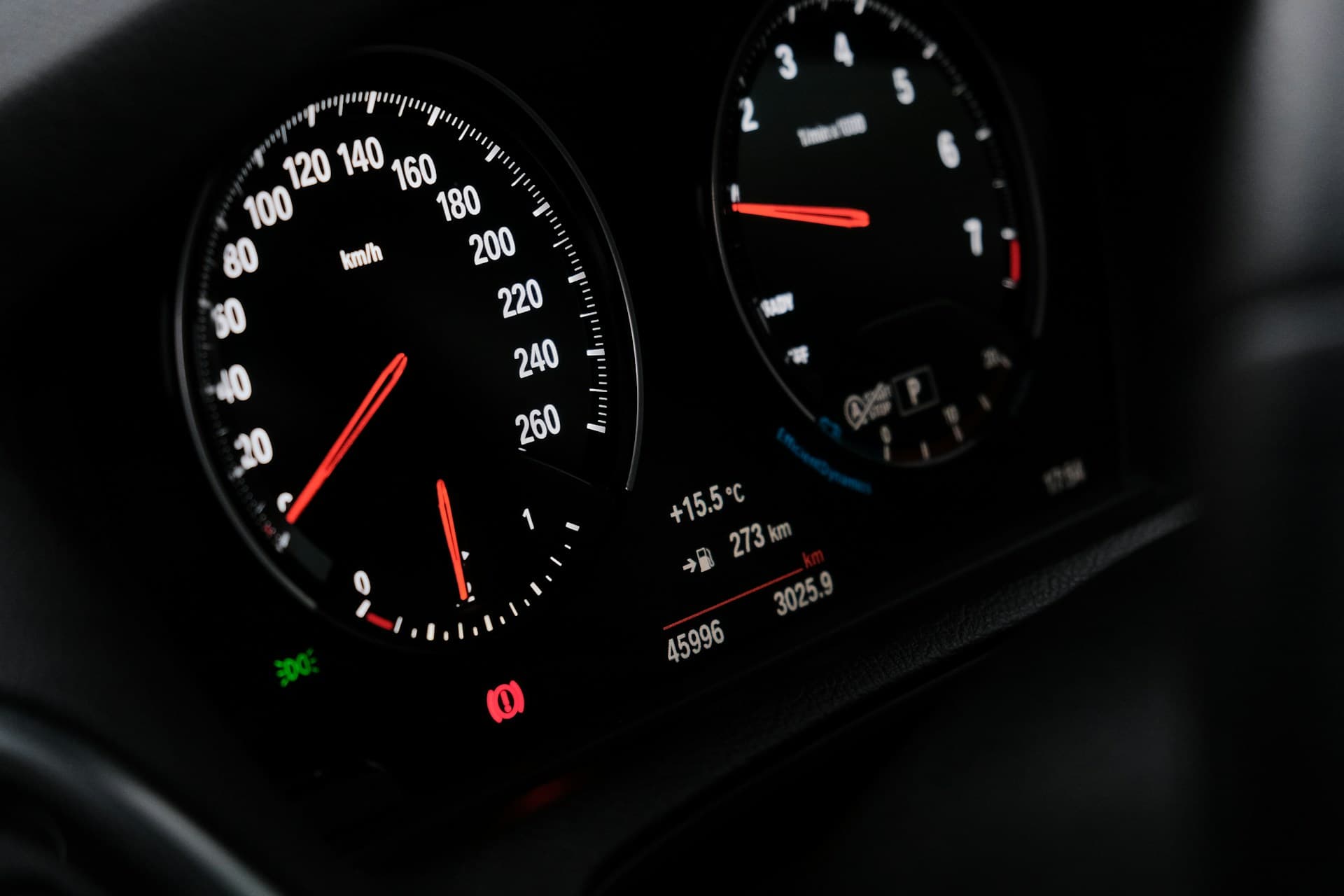
Inspect the wear items. The driver's seat, steering wheel, shift knob, and pedal pads wear at predictable rates. A car claiming 80,000 miles with a shiny steering wheel and worn brake pedal almost certainly has more. The tires also tell a story — the DOT date code (last four digits of the tire serial number, format WWYY) tells you when the tire was manufactured. A car with 60,000 miles and tires from 2024 that are nearly bald has likely been driven more than the odometer says.
Look at the service intervals. The oil change sticker in the windshield sometimes shows the next service mileage. If the sticker says "next oil change at 135,000" and the odometer reads 110,000, something is off. This is a surprisingly common oversight by fraudsters.
Check the pedals. Rubber pedal covers wear down with use. A manual transmission car should have a visible wear pattern on the clutch pedal pad. An automatic should have smooth rubber on the brake pedal, not smooth and shiny. Excessive wear relative to the claimed mileage is a red flag.
The Pre-Purchase Inspection Checklist for High-Mileage Cars
A professional PPI is worth paying for on any used car, but it is non-negotiable on a high-mileage purchase. Here is what the mechanic should check that matters most at 100,000+ miles.
Compression test and leak-down test. This tells you the health of the piston rings and valves. Low compression on a cylinder means a rebuild or replacement is coming. On a 150,000-mile car, a compression test is the single most informative check.
Transmission fluid condition. The fluid should be red or dark red, not burnt brown or black. It should smell like oil, not burnt toast. If the fluid is dark and the transmission shifts well, a fluid change is overdue. If the fluid is dark and the transmission shifts poorly, the damage may already be done. This is especially important for CVTs — the signs of a failing unit include hesitation, shuddering on acceleration, whining noises, and delayed engagement when shifting from Park to Drive. Our Nissan Altima guide covers what CVT failure looks like on the most commonly affected models.
Coolant condition and level. Check for oil in the coolant (milky appearance — indicates a head gasket failure) and coolant in the oil (milky oil on the dipstick — same issue). Also check for dried coolant crust around the water pump weep hole (indicates a failing water pump).
Timing belt/chain inspection. If the engine has a timing belt and it is over 100,000 miles, it should be replaced immediately if there's no record of it being done. A timing chain should be checked for tensioner noise on cold start — a rattling chain needs immediate attention.
Suspension bushings and ball joints. Have the mechanic put the car on a lift and check all rubber bushings in the front and rear suspension. Cracked or separated bushings mean the car will drive sloppy and wear tires prematurely. On high-mileage cars in the rust belt, also check brake lines and fuel lines for corrosion.
Corrosion check on the frame and subframes. Surface rust is normal. Flaking rust, rust holes, or rust bubbling through paint on structural components is a dealbreaker. This is especially important on trucks and SUVs. Our flood damage detection guide covers the related issue of water-damaged vehicles.
You can do a surprising amount of this inspection yourself before paying a mechanic. Our 10-minute self-inspection guide covers the checks you can run in a parking lot without any tools.
The Bottom Line on High-Mileage Used Cars
Buying a car with 100,000+ miles is not a gamble if you follow the framework: choose a proven model, verify the maintenance records, get a PPI, and budget for the predictable 100K services. The best high-mileage cars — Toyota Camry and Corolla, Honda Accord and CR-V, Toyota RAV4 and 4Runner, Mazda6, Toyota/Lexus V8 trucks, and Toyota hybrids — are engineered to go well past 200,000 miles with routine care.
The money you save buying high-mileage is real. A 2015 Camry with 120,000 miles costs roughly half what a 2019 Camry with 40,000 miles costs, and both have a similar amount of remaining life if maintained. The difference is depreciation — the high-mileage car has already taken its hit.
The key is knowing what you are looking at. A Squeezed report gives you the full risk picture for the exact car you are considering — known issues for that year, engine, and trim — in about a minute. It is the step between finding a high-mileage listing and making an offer.
FAQ
Is 100,000 miles too high for a used car?
No, not for a well-maintained model from a reliable manufacturer. Modern cars routinely last 200,000+ miles with proper maintenance. The question is not whether 100,000 miles is too high — it is whether the specific car was maintained. A Toyota Camry, Honda Accord, or Mazda6 with 120,000 miles and documented service history can easily provide another 100,000 miles of reliable service.
What is the best high-mileage used car to buy?
The Toyota Camry (2012–2017) with the 2.5L four-cylinder is the safest high-mileage buy overall — proven to 250,000 miles, cheap parts, and widely available. For an SUV, the Toyota RAV4 Hybrid (2016–2018) or the naturally aspirated Honda CR-V (2015–2016) are excellent. For a truck, the Toyota Tundra 5.7L V8 (2007–2013) is the most durable high-mileage option.
What maintenance is due at 100,000 miles?
The major items due around 100,000 miles include: timing belt (if equipped) and water pump ($800–$2,500), transmission fluid service ($200–$400), spark plugs ($150–$1,200 depending on engine), coolant flush, brake fluid flush, and suspension inspection. Cars with documented proof of these services are worth significantly more than those without.
Which used cars should I avoid at high mileage?
Be most cautious with: Nissan Altima/Sentra/Rogue with original CVT (failure window 80,000–120,000 miles), Ford Focus/Fiesta with DPS6 dual-clutch automatic (inherently failure-prone), German luxury sedans and SUVs without documented maintenance (cooling system, timing chain, and suspension costs add up fast), and Range Rover/Land Rover models (air suspension, timing chain, and electrical issues). None are automatic dealbreakers, but each needs specific inspection and a larger repair budget.
Do hybrids hold up well at high mileage?
Yes — Toyota and Lexus hybrids are among the most durable high-mileage vehicles you can buy. The Toyota Hybrid Synergy Drive system has proven itself in taxi and rideshare service with many examples exceeding 300,000 miles on original battery packs. The main consideration is battery degradation: expect a replacement cost of $1,500–$4,000 around 150,000–200,000 miles. A high-mileage hybrid priced with that eventual cost in mind can be an excellent value.
Should I buy an extended warranty for a high-mileage car?
Generally no. Extended warranties on high-mileage cars cost $2,000–$4,000 and have more exclusions than low-mileage policies. On a reliable model like a Toyota Camry or Honda CR-V, the odds of a repair exceeding the warranty cost are low. You are better off setting the same money aside in a dedicated repair fund. Exceptions exist for high-mileage European luxury cars, but premiums are often prohibitive over 100,000 miles.
How can I tell if a high-mileage car's odometer has been rolled back?
Check the vehicle history report (Carfax or AutoCheck) for odometer readings recorded at inspections and service visits — look for inconsistencies. Inspect wear on the driver's seat, steering wheel, shift knob, and pedal pads. Check the DOT date codes on the tires and compare against the claimed mileage. Look for an old oil change sticker in the windshield showing a higher upcoming service mileage than the current odometer reading. These physical checks catch fraud that a clean Carfax might miss.
What is the best mileage range for a high-mileage purchase?
For the best value, target 100,000–140,000 miles on a model known for durability. At this range, the car has already taken its steepest depreciation hit and the major 100,000-mile services may or may not be done — if the seller has receipts for timing belt, water pump, and transmission service, you are in the sweet spot. Avoid the 140,000– 180,000 mile range on cars without major service documentation, as the cost of catching up on deferred maintenance can exceed the car's value.
Is a European luxury car worth buying at high mileage?
It depends on your tolerance for maintenance costs. The engines and transmissions in BMWs, Audis, and Mercedes-Benzes are generally capable of 200,000 miles. However, the supporting systems — cooling system, oil separators, timing chain tensioners, electronic modules, air suspension — fail earlier and cost more to fix. Budget $2,000–$4,000 per year in maintenance on a high-mileage German car. If that is acceptable, a well-documented example can be a rewarding purchase. If you want the lowest total cost of ownership, buy Japanese.
Should I get a pre-purchase inspection on a high-mileage car?
Absolutely. A pre-purchase inspection (PPI) is non-negotiable on any car over 100,000 miles. The mechanic should perform a compression and leak-down test (checks piston ring and valve health), inspect the transmission fluid condition, check for coolant leaks and water pump weepage, inspect suspension bushings and ball joints, and check for frame and subframe corrosion. A $150–$200 PPI can save you thousands in unexpected repairs.