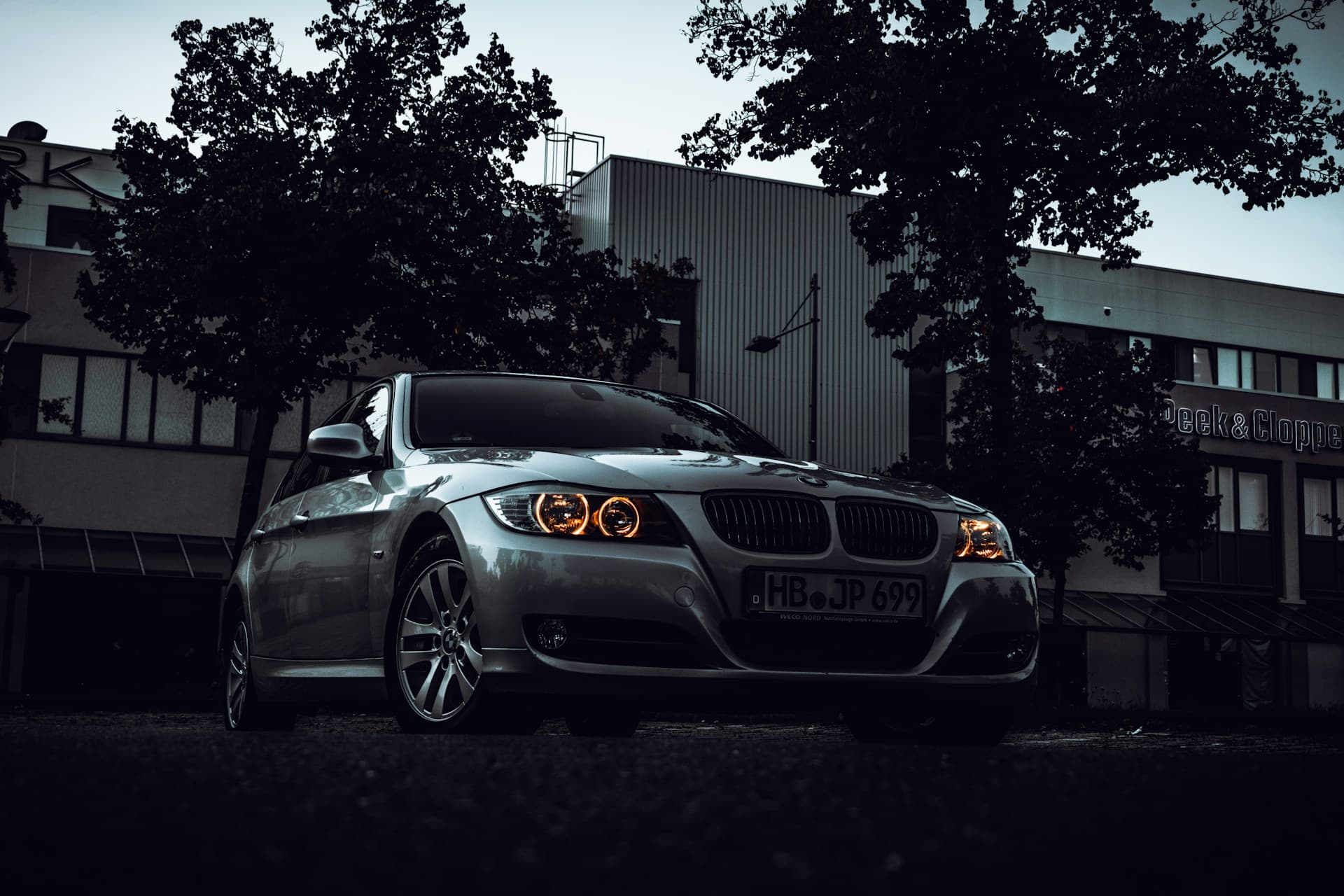
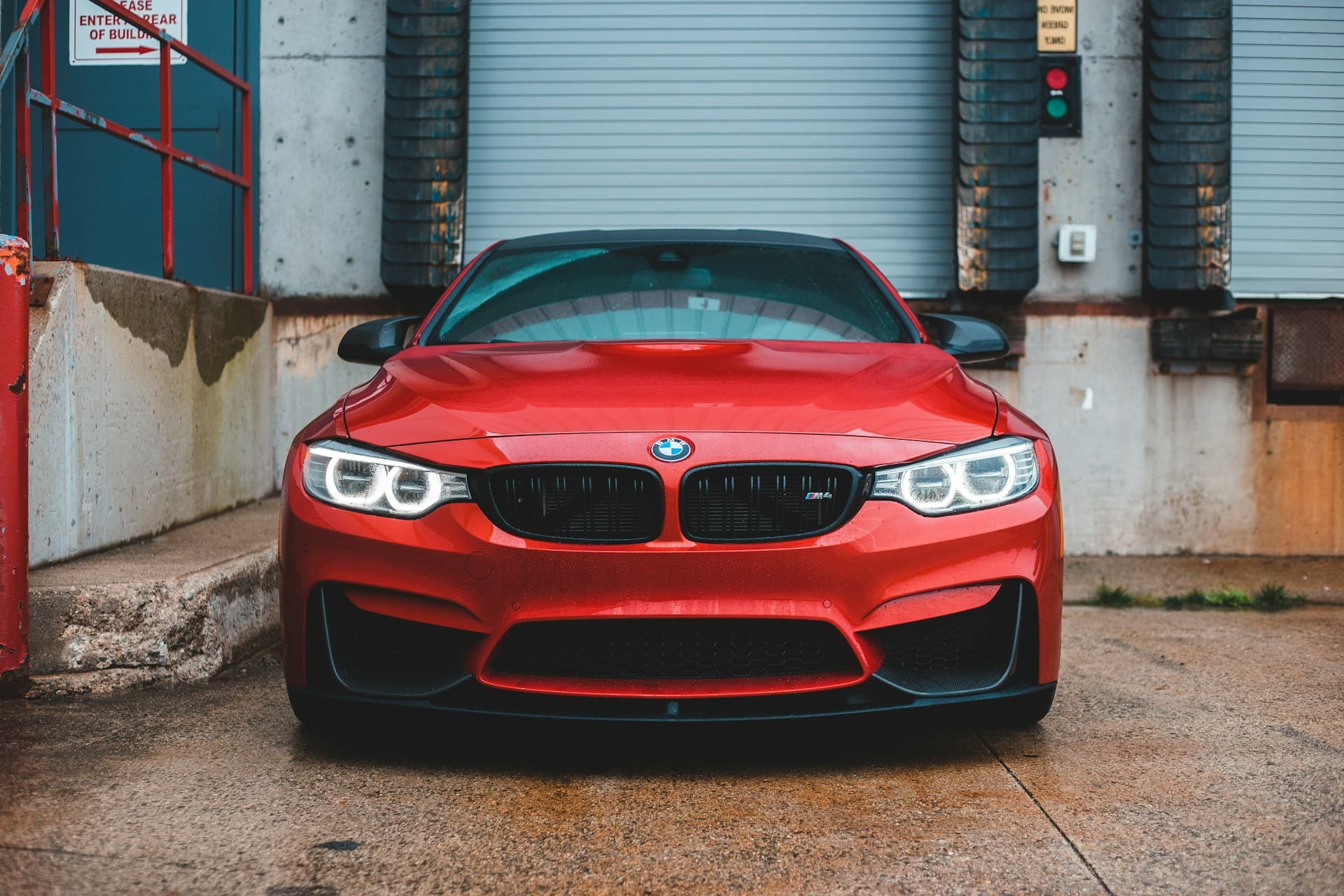
BMW M3/M4 (F80/F82) Buyer's Guide: S55 Engine Problems and Reliability (2015-2020)
BMW · M3 / M4 · F80/F82 · 2015–2020
2015-2020 BMW M3 (F80) and M4 (F82/F83) buyer's guide: complete analysis of crank hub spin risk, S55 carbon buildup, charge air cooler leaks, exhaust flap rattle, pricing, and maintenance costs.
 Mirko7 min read
On this page8 sections
Introduced in 2014 (2015 model year), the F80 M3 and F82/F83 M4 brought a shift from naturally aspirated V8 to a twin-turbo inline-six. The S55 engine delivers strong performance but introduces several failure points that can lead to thousands in repairs. The most critical risk is crank hub slip, which can destroy the engine on both tuned and stock cars. Understanding these issues before you buy is essential to finding an F80/F82 that's a joy to own rather than an expensive project.
Generation Overview
The F80 M3 (sedan) and F82 M4 (coupe) / F83 M4 (convertible) were produced from 2015 to 2020. All variants use the 3.0L twin-turbo S55 I6, rated at 425 hp (431 hp with Competition Package). Mid-cycle changes in 2018 brought updated iDrive, LED headlights, and minor suspension tweaks. The Competition Package (ZCP) added 19 hp, adaptive dampers, and a revised exhaust. This generation is praised for its chassis balance and daily usability but marred by a common engine vulnerability.
Pricing Guide
Here is what you can expect to pay for an F80/F82 in 2026: 2015-2016 M3/M4: $30,000-$40,000 (40,000-70,000 miles) 2017-2018 M3/M4: $38,000-$50,000 (25,000-50,000 miles) 2019-2020 M3/M4 (Competition): $48,000-$60,000 (15,000-35,000 miles)
Competition Package cars command a $3,000-5,000 premium. Manual transmission models are $2,000-4,000 more than DCT. Convertible (F83) models are $3,000- 5,000 less than coupes due to the added weight and complexity. Low-mileage, well-documented examples at the higher end of the range are almost always worth the premium.
Known Issues
Crank Hub Spin
The S55's crank hub is keyed but the bolt can loosen, allowing the hub to spin relative to the crankshaft. This shifts cam timing, often leading to bent valves or piston/valve contact. Reports are most frequent on tuned cars (higher boost and rev limits) but stock examples have also failed. Severity: Critical. What to watch for: check engine light with timing-related codes (e.g., 130308, 13010A); rough idle or misfire on cold start. Prevention: aftermarket crank hub capture or pinned hub ($1,500-2,500 installed). This is the most important preventative maintenance you can do on an S55-powered car.
S55 Carbon Buildup
Direct injection leaves no fuel wash over intake valves, causing carbon deposits that restrict airflow. Symptoms include reduced power, rough idle, and misfire codes. All S55 engines require walnut blasting every 40,000-60,000 miles, costing $800-$1,200. Severity: Medium. What to watch for: black smoke from exhaust on cold start; gradual power loss above 5,000 RPM. If the car has 40,000+ miles and no documented carbon cleaning, budget for it immediately.
Charge Air Cooler Coolant Leaks
The S55 uses a hybrid air-to-water intercooler system; the charge air cooler bricks are submerged in coolant and can develop internal cracks. Coolant mixes with intake air, causing misfires and potential hydrolock. Reported across all model years, often after 40,000 miles. Severity: High. What to watch for: coolant smell from vents, white smoke from exhaust, frequent coolant loss with no external leak. Repair costs $2,000-3,500 for replacement.
Exhaust Flap Rattle
The M4 and M3's active exhaust has a vacuum-actuated flap that develops a metallic rattle on cold start, especially in Sport or Sport+ modes. This is a cosmetic sound issue, not mechanical failure. Severity: Low. What to watch for: rattle that disappears as engine warms or exhaust valve closes. Some owners disable the exhaust flap or replace the actuator to resolve it.
Crankcase Vent Valve Failure
The PCV system is integrated into the valve cover. The diaphragm can rupture, causing high crankcase pressure, oil leaks, or vacuum issues. Affects all S55 engines, often between 50,000-80,000 miles. Severity: Medium. What to watch for: whistling noise from engine bay, oil seepage around valve cover, rough idle after deceleration. Valve cover replacement costs $800-1,200.
Sub-Variant Issues
Carbon Ceramic Brake Noise (if equipped)
If the car has carbon ceramic brakes (CCB), expect significant squeal during low-speed stops, especially when cold. This is inherent to the compound and not a defect, but it cannot be fixed with pad changes. The rotors are also extremely expensive to replace — roughly $8,000-$10,000 for a set of four rotors. If you're looking at a CCB-equipped M3/M4, budget for persistent noise and high replacement costs. The steel brake option is more practical for daily driving.
DCT vs Manual
The 7-speed DCT is faster and more daily-friendly, but the mechatronics unit can fail ($3,000-5,000). The 6-speed manual is more engaging and has fewer expensive failure points, but the clutch is weak for tuned cars. For a daily driver, the DCT is the better choice. For a weekend/track car, the manual is more engaging and potentially more reliable long-term.
Maintenance Costs
- Oil changes: $100-150 (9 quarts of 0W-40 synthetic) - Carbon cleaning (walnut blasting): $800-1,200 (every 40,000-60,000 miles) - Crank hub preventative: $1,500-2,500 (recommended) - Brake pads: $500-1,000 per axle - Tires: $1,200-1,800 per set - DCT fluid change: $400-600 (every 50,000 miles)
Annual maintenance averages $2,000-3,500 for a well-maintained F80/F82. Budget an additional $1,500-2,500 for the crank hub preventative and $800- 1,200 for carbon cleaning if not already done.
Which Model Year to Buy
The 2018-2020 models (post-2018 refresh) are the best choice. The LCI update brought improved iDrive, standard LED headlights, and minor suspension improvements. The Competition Package was standard from 2019, and many of the early production issues had been addressed. If budget is tight, a 2016-2017 with documented maintenance and an already-installed crank hub capture is a solid alternative.
Frequently Asked Questions
Is the F80 M3 reliable?
The S55 engine is reliable for a high-performance turbocharged engine, but it has specific known issues. The crank hub is the main concern — it can fail even on stock cars. Carbon buildup, charge air cooler leaks, and PCV failure are the other common issues. A well-maintained F80/F82 with preventative crank hub work is a reliable daily driver. One without these services is a risk.
Is the crank hub failure inevitable?
No, but it's common enough that preventative work is recommended. The failure rate on stock cars is relatively low (estimated 5-10%), but it increases significantly on tuned cars (20-30%+). For peace of mind, many owners install a crank hub capture or pinned hub as preventative maintenance. This is the most recommended modification on the S55 platform.
Should I buy a tuned M3/M4?
Be very careful with tuned cars. A tuned S55 makes significantly more power (500-600 hp is common with just software) but increases the risk of crank hub failure and puts additional stress on the cooling system. If the car is tuned, verify that the crank hub has been addressed and that the car hasn't been abused at track days. A stock, well-maintained car is almost always the safer choice.
What should I check on a test drive?
Start the engine cold and listen for misfires or rough idle (crank hub, carbon buildup). Drive the car at various speeds and listen for coolant smells (charge air cooler). Test the exhaust flap at idle and under load. Check for oil seepage around the valve cover. Test all iDrive functions. If the car has CCB, expect brake squeal. A pre-purchase inspection ($200-400) at a BMW specialist is mandatory for this car.
This page covers what's documented about the F80/F82 generally. The car you're looking at has its own history — its own mileage, service gaps, and previous owners. A Squeezed report pulls the exact risk profile for your specific year, trim, and spec. Run a report.
FAQ
What are the most common problems with the BMW M3/M4 (F80/F82) (2015-2020)?
Crank hub spin is the most serious S55 engine failure, capable of destroying the engine. Charge air cooler coolant leaks and S55 carbon buildup are the next most common issues to check for.
Is the BMW M3/M4 (F80/F82) (2015-2020) reliable?
It requires careful buying. Crank hub spin is a known, catastrophic failure mode on the S55, and cars with aggressive tunes are at meaningfully higher risk — a documented history of stock tuning and preventive maintenance matters a great deal here.
Are there BMW M3/M4 (F80/F82) years to avoid?
Crank hub spin risk applies across the full 2015-2020 production run rather than isolated years, and correlates more with modification history than model year — heavily tuned examples carry meaningfully more risk regardless of when they were built.