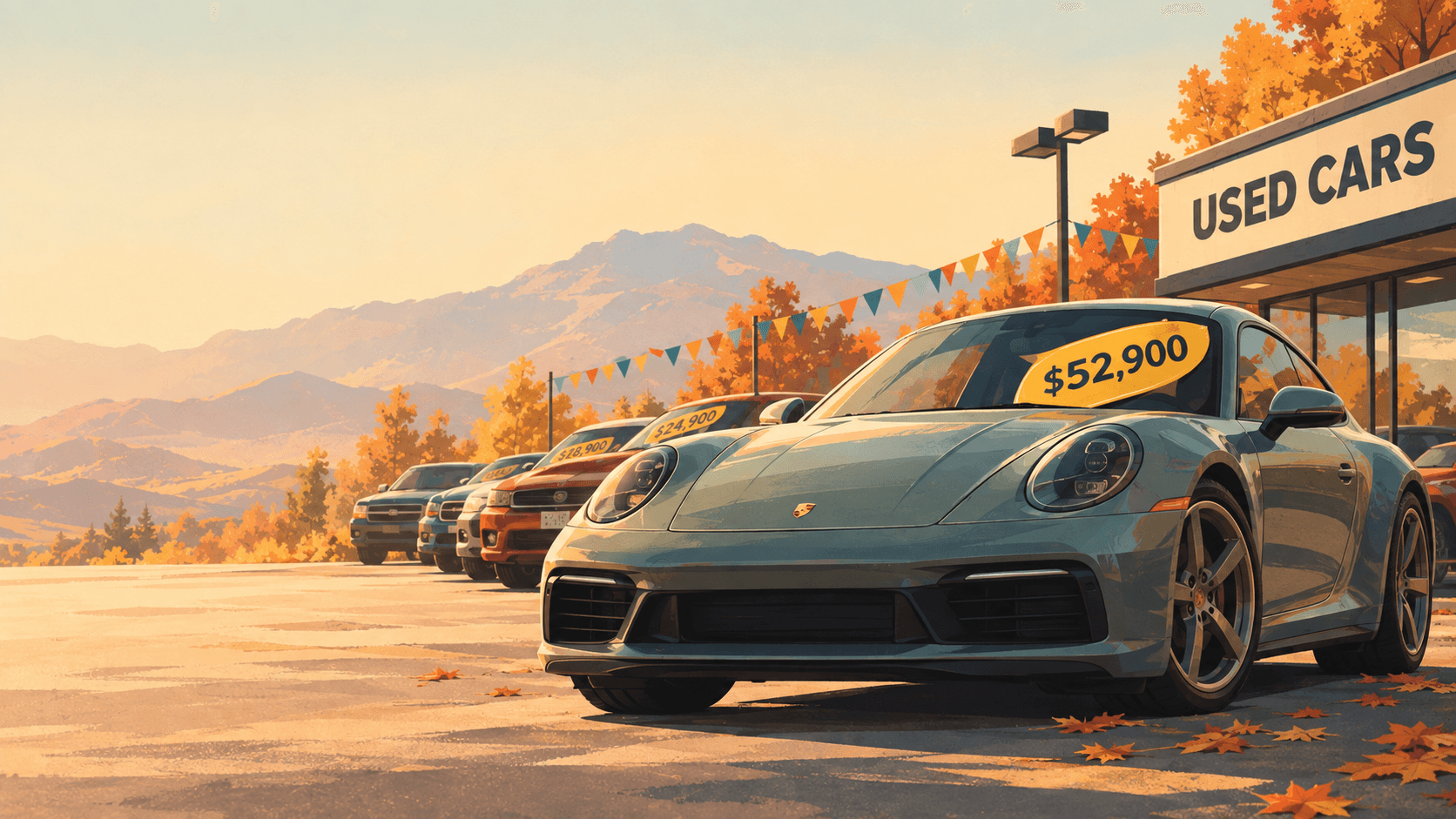
Japanese Automakers Just Absorbed a $40 Billion Tariff Hit. Here's What Used Car Buyers Need to Know
Toyota, Honda, Subaru, Mazda, and Nissan are absorbing a combined $40 billion in tariff costs in 2026. But the impact is not uniform, because where a car was assembled matters enormously. Here's what used car buyers need to know about which Japanese models are affected, which aren't, and how to use this to shop smarter.
 Mirko7 min read
On this page7 sections
Japanese automakers, the backbone of the used car market for reliability- conscious buyers, are absorbing a combined $40 billion in tariff costs in 2026. Toyota, Honda, Subaru, Mazda, and Nissan are all affected. New car prices on some of their most popular models have risen thousands of dollars. But here's the thing: the impact is not uniform. Whether a Japanese brand vehicle is affected depends almost entirely on where it was assembled, not who made it. A Toyota assembled in Kentucky is treated very differently than a Toyota assembled in Japan under current trade policy. Understanding this distinction can help you make a smarter buying decision in the used market right now.
Which Japanese Models Are Built in the United States
A meaningful portion of Japanese brand vehicles sold in the US are assembled domestically. These are not affected by the vehicle import tariff directly. Toyota has significant US manufacturing. The Toyota Camry is assembled in Georgetown, Kentucky. The Toyota Sienna is assembled in Princeton, Indiana. The Toyota Avalon was assembled in Georgetown (though the model was discontinued). The Toyota Tacoma is assembled in San Antonio, Texas. These models are insulated from the import tariff on the vehicle itself. Honda also has a large US manufacturing footprint. The Honda Accord is assembled in Marysville, Ohio. The Honda Odyssey is assembled in Lincoln, Alabama. The Honda Pilot is assembled in Lincoln, Alabama. The Honda CR-V has a more complicated picture: 2023 and newer CR-Vs are assembled in Greensburg, Indiana, while earlier generations were assembled in East Liberty, Ohio or imported. Subaru is the exception. Despite having a joint venture plant in Lafayette, Indiana (which produces the Outback and Legacy for certain model years), a substantial portion of Subaru's US sales come from Japan-assembled vehicles. Mazda has no significant US final assembly; its vehicles are primarily assembled in Hiroshima and Hofu, Japan, or Salamanca, Mexico.
Which Japanese Models Are Most Tariff-Exposed
The brands and models built primarily outside the US are seeing the largest new car price increases. Subaru: The Forester, Impreza, WRX, and Crosstrek are assembled in Gunma, Japan. New car prices on these models have risen noticeably in 2026, and some trims have seen inventory tighten as importers work through the new cost structure. Mazda: The entire passenger car and SUV lineup (Mazda3, CX-5, CX-50 from some plants, MX-5 Miata) is assembled in Japan or Mexico. New Mazda prices have increased across the board. Nissan and Infiniti: Many Nissan models are assembled in Smyrna, Tennessee (Rogue, Leaf, Altima) and Canton, Mississippi (Frontier, Titan). But premium models and several Infiniti vehicles are assembled in Japan and have seen price increases. Toyota globally sourced models: While the Camry and Tacoma are US-assembled, several Toyota models including the Corolla Cross, C-HR, and various Lexus models are assembled in Japan and have seen price increases.
Two Effects on the Used Car Market
The tariff situation is creating two distinct effects for used car buyers, and they push in opposite directions. The first effect is increased demand for used versions of tariff-exposed models. When a new Subaru Forester costs $3,000 to $5,000 more than it did last year, buyers who were planning to buy new sometimes pivot to the used market. This increases competition for used Subaru Foresters, Mazda CX-5s, and similar models. Prices on these used cars may be higher than their age, mileage, and condition would normally justify. The second effect is a relative shift in demand toward domestically assembled Japanese models. If you can buy a new Toyota Camry at roughly the same price as last year (because it's assembled in Kentucky and mostly avoids the import tariff), used Camry prices are not being driven up by the same demand pressure. This makes used domestically assembled Japanese models a relatively better value at the moment. The practical implication: a used Subaru Forester and a used Toyota Camry may both be reliable cars, but the Forester may be carrying a demand premium right now that isn't really about the car itself.
How to Check Where Your Target Car Was Built
You can verify where any specific car was assembled by looking at the first character of its 17-digit VIN, visible through the windshield on the dashboard or on the driver's door jamb. A VIN starting with 1, 4, or 5 indicates final assembly in the United States. A VIN starting with J indicates Japan. W indicates Germany. 2 indicates Canada. 3 or K typically indicates Mexico or South Korea. This is one of the fastest and most useful checks you can do on any used car before you get invested in a specific listing. If the VIN starts with J and the asking price feels high, you now know one possible reason why. Note that domestic final assembly does not mean all components were US-sourced. A Kentucky-assembled Toyota Camry still uses some parts from Japan and other countries, and tariffs on those components have slightly raised manufacturing costs. But the vehicle-level import tariff, which adds $5,000 to $8,900 per car, only applies when the vehicle itself crosses the border.
What This Means for Your Search
For buyers targeting Japanese brands, the current environment rewards precision. Two cars from the same brand can have very different demand dynamics right now depending on where they were assembled. If you're set on a Subaru or Mazda, you should expect some demand pressure on popular used models and be prepared to pay close to market value. These brands still offer excellent reliability and value, but the pricing cushion you'd normally expect from shopping used may be thinner than usual. If you're open to US-assembled Japanese brand models, you're in a stronger position. A Honda Accord, Toyota Camry, or Honda Pilot assembled in the US offers the same reputation for reliability without the tariff-driven demand premium on the used equivalent. Whatever you're targeting, the current market is one where doing a little more homework pays off more than usual. Sellers know demand is elevated on popular foreign-assembled models and may price accordingly.
Before You Make an Offer
A Squeezed report on any used car takes 45 seconds and gives you the model's known reliability patterns, common failure points, what repairs typically cost, and a price consensus from real market data. In a market where some used cars are priced high partly because of tariff-driven demand distortion rather than the car's actual quality, knowing whether the asking price reflects fair value is more important than ever. It won't tell you which politics created the tariff. But it will tell you whether the car you're considering is worth what the seller is asking, and whether the model itself has a track record worth trusting.
Frequently Asked Questions
Are Japanese cars still reliable even with the tariff situation?
Yes. The tariff situation is about manufacturing economics and trade policy, not build quality. Toyota, Honda, Subaru, and Mazda have not changed their manufacturing processes or quality standards. A Japan-assembled Subaru Forester is built to the same quality standards as it always was. The issue for used car buyers is pricing, not reliability.
Should I avoid Japanese cars because of tariffs?
No. Japanese brand vehicles remain among the most reliable and cost-effective used car options in every segment. The tariff situation just means you should be aware of demand-driven price inflation on certain models, check where your specific car was assembled, and compare prices more carefully than you might have a year ago.
Will Japanese car prices come down if tariffs are reduced?
If tariffs are reduced or eliminated, new car prices on Japan-assembled models would likely fall. That would reduce the demand pressure driving up used prices on those models. However, trade policy changes are unpredictable in timing and direction. Buying decisions based on expected tariff changes are speculative. Focus on current market values and the specific car in front of you.
Does this affect certified pre-owned programs from Japanese brands?
Somewhat. CPO inventory from Japanese brands comes from lease returns and trade-ins, which are not directly affected by new car tariffs. But if demand for CPO vehicles from popular Japanese brands is elevated because new car prices are high, dealers can price CPO vehicles more aggressively knowing buyers have fewer options. Compare CPO prices carefully against private party equivalents before assuming the CPO premium is justified.