Every 4th Gen CR-V year compared
| Year | Verdict | Major problems | Complaints | Recalls |
|---|---|---|---|---|
| 2012 | n/a | 1 | n/a | n/a |
| 2013 | n/a | 1 | n/a | n/a |
| 2014 | n/a | 1 | n/a | n/a |
| 2015 | n/a | 1 | n/a | n/a |
| 2016 | n/a | 1 | n/a | n/a |
Owner complaints and recalls are from NHTSA. A year is marked to avoid when it has a critical problem the rest of the generation does not, or at least twice the generation's complaint rate once its age is taken into account. Years less than three years old are too new to judge. n/a means NHTSA has no data for that year.
Known problems on the 4th Gen CR-V
- Critical · deal-breakers
- Major · costly soon
- Caution · keep an eye on
- OK · low concern
- MajorAll years$700-1,100
A/C Compressor Failure
A/C compressor clutch can fail, causing intermittent or no cooling. Common across Honda models of this era. Replacement with updated compressor is the permanent fix.
- Caution2012-2014$2,500-4,000
Piston Ring Oil Consumption (2012-2014)
Some K24 engines consume oil at 1 quart per 3,000-4,000 miles. Less common than the 9th-gen Accord issue. Monitor oil level between changes.
- CautionAll years$400-600
VTC Actuator Rattle (Cold Start)
Variable Timing Control actuator can rattle briefly on cold start. Common Honda issue, not harmful but annoying. Updated actuator available.
- OKAll years$400-800
Infotainment Screen Delamination
Display screen can develop bubbles or edge separation. Only affects visual quality, not function. Aftermarket replacements available.
About the 4th Gen CR-V
The 2012-2016 Honda CR-V represents the fourth generation of the compact SUV, a significant redesign that adopted a more car-like, streamlined appearance and a lower cargo floor for improved utility. This generation moved away from the previous boxy, truck-influenced styling and introduced a continuously variable transmission (CVT) for the 2015 model year refresh, replacing the earlier five-speed automatic. All models are powered by a 2.4-liter four-cylinder engine, with front-wheel drive as standard and all-wheel drive available across the lineup.
Body styles were limited to a single five-door SUV configuration, offered in LX, EX, EX-L, and Touring trims. The 2015 update also brought revised front and rear styling, improved interior materials, and the availability of Honda’s LaneWatch camera system. Compared to the third generation, this CR-V is more fuel-efficient and offers a more refined ride, though it sacrifices some off-road capability and towing capacity for on-road comfort.
As a used buy, the fourth-generation CR-V suits buyers seeking a dependable, practical, and fuel-efficient compact SUV with strong resale value. Its reputation is generally positive, with owners praising its spacious interior, user-friendly controls, and low ownership costs. However, some early models have reported vibration issues with the CVT, so a thorough inspection of the transmission is advisable.
Other Honda CR-V generations
Free Car Finder
Still deciding on the Honda CR-V?
Answer a few quick questions and see your top 3 used cars, with the years to shop.
Before you message the seller
Say goodbye to surprise repair bills.
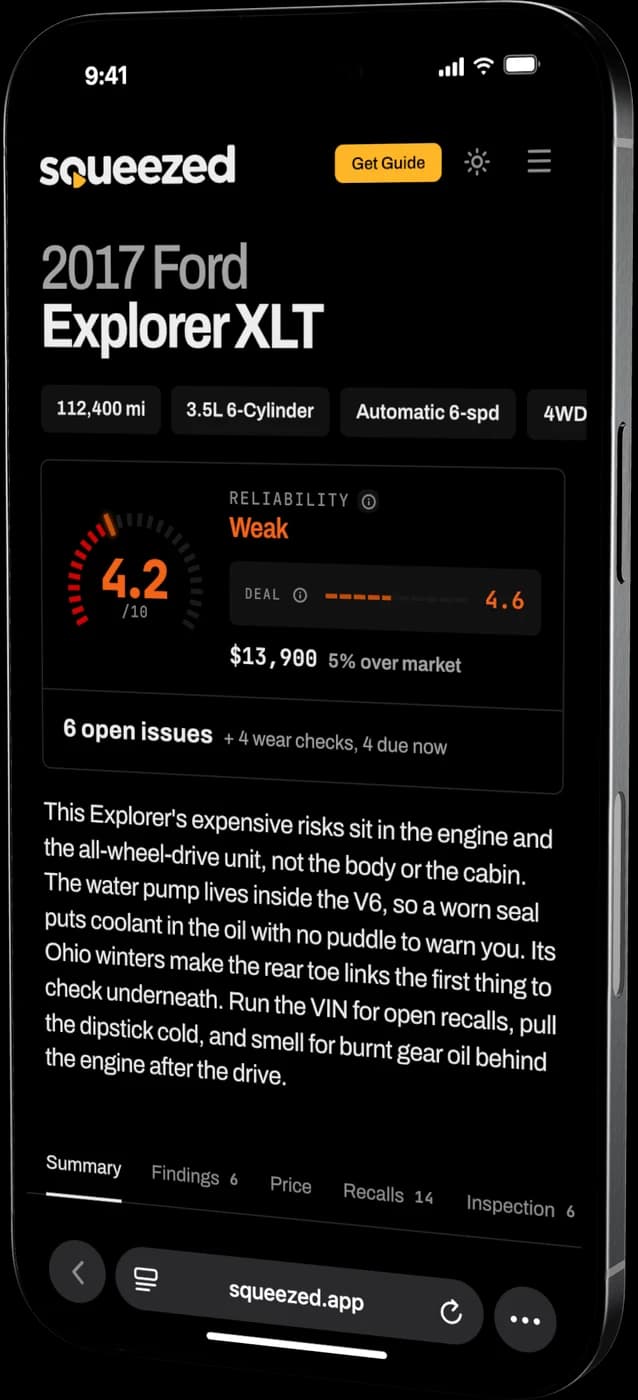
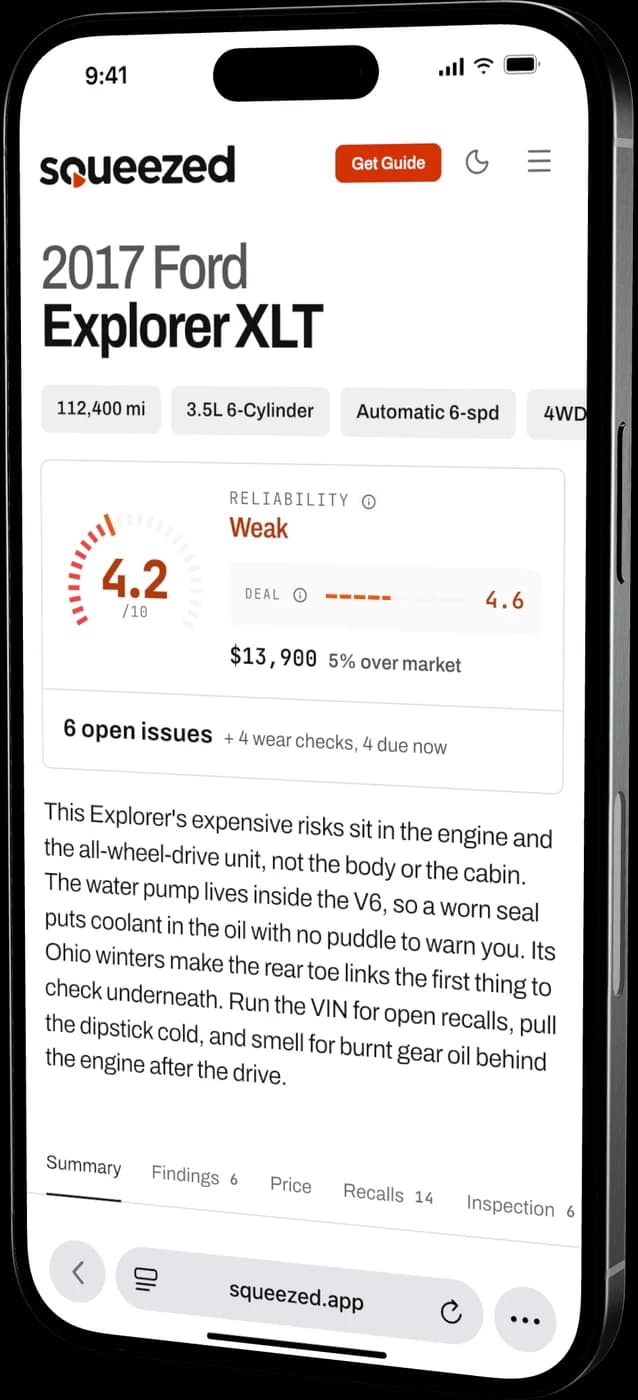
Search the car you’re looking at. In about a minute: known failure patterns, repair cost exposure, questions to ask the seller and an overall risk rating.
Use it before you book an inspection
Squeezed is a buyer guide based on public data and industry patterns, not a mechanical inspection. Always get a professional pre-purchase inspection before you buy.