Every 4th Gen RAV4 year compared
| Year | Verdict | Major problems | Complaints | Recalls |
|---|---|---|---|---|
| 2013 | n/a | 0 | n/a | n/a |
| 2014 | n/a | 0 | n/a | n/a |
| 2015 | n/a | 0 | n/a | n/a |
| 2016 | n/a | 1 | n/a | n/a |
| 2017 | n/a | 1 | n/a | n/a |
| 2018 | n/a | 1 | n/a | n/a |
Owner complaints and recalls are from NHTSA. A year is marked to avoid when it has a critical problem the rest of the generation does not, or at least twice the generation's complaint rate once its age is taken into account. Years less than three years old are too new to judge. n/a means NHTSA has no data for that year.
Known problems on the 4th Gen RAV4
- Critical · deal-breakers
- Major · costly soon
- Caution · keep an eye on
- OK · low concern
- Major2016-2018$2,000-4,000
Hybrid Cable Corrosion (2016+ Hybrid)
On the RAV4 Hybrid (2016+), the high-voltage cable connector under the rear seat can corrode in salt-belt states. Less common than 5th-gen but still reported. Check for corrosion if buying a northern-state hybrid.
- CautionAll years$200-400
Torque Converter Shudder (Gas)
Some 6-speed automatics develop a shudder between 35-45 mph. A fluid flush with updated Toyota WS fluid often resolves. Not a common failure.
- OKAll years$500-900
Infotainment Screen Delamination
Entune display can develop edge separation in hot climates. Replacement is the only fix. Aftermarket units available.
- OKAll years$0-50
Rear Hatch Rattle
Rear liftgate can rattle on rough roads. Adjusting the rubber bump stops typically resolves. Not a reliability concern.
About the 4th Gen RAV4
The 2013-2018 Toyota RAV4 represents the fourth generation of Toyota’s compact crossover, fully redesigned for the 2013 model year. This generation abandoned the previous rear-mounted spare tire and side-hinged tailgate for a more conventional liftgate, and it was offered exclusively as a five-door SUV. Compared to its predecessor, the interior gained higher-quality materials and a more carlike driving position, while the 2016 refresh added a standard backup camera and introduced a hybrid variant to the lineup.
Powertrain choices centered on a 2.5-liter four-cylinder engine paired with a six-speed automatic transmission on gasoline models. The hybrid, added in 2016, combined the same 2.5-liter engine with an electronically controlled continuously variable transmission (eCVT) for improved fuel economy. Front-wheel drive was standard, with an available all-wheel-drive system on most trims. Body styles were limited to the SUV configuration; no two-door or convertible versions were produced. Trim levels included LE, XLE, SE, and Limited, with hybrid-specific trims mirroring the lineup.
As a used buy, this generation suits shoppers seeking a dependable, spacious compact crossover with a comfortable ride and strong resale value. Its reputation for reliability is generally strong, though earlier model years may require attention to minor infotainment quirks. The 2013-2018 Toyota RAV4 remains a practical choice for daily driving and family use, with the hybrid offering a notable efficiency advantage for those willing to pay a slight premium on the used market.
Other Toyota RAV4 generations
Free Car Finder
Still deciding on the Toyota RAV4?
Answer a few quick questions and see your top 3 used cars, with the years to shop.
Before you message the seller
Say goodbye to surprise repair bills.
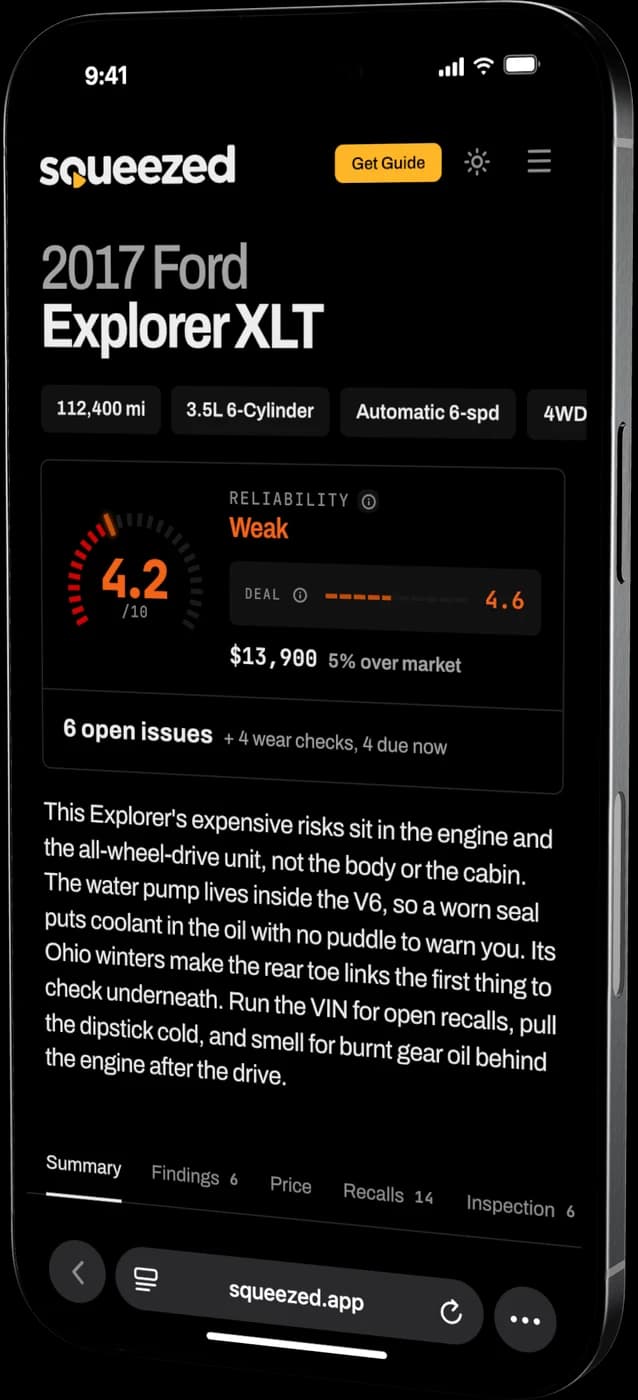
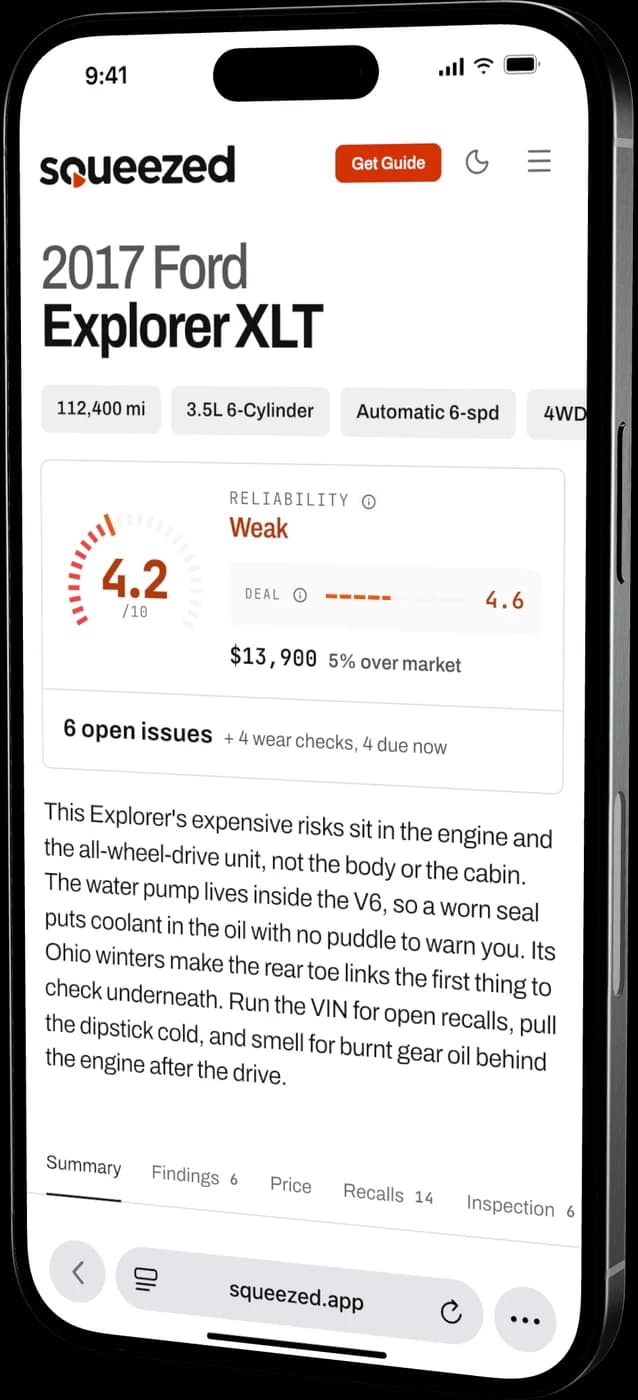
Search the car you’re looking at. In about a minute: known failure patterns, repair cost exposure, questions to ask the seller and an overall risk rating.
Use it before you book an inspection
Squeezed is a buyer guide based on public data and industry patterns, not a mechanical inspection. Always get a professional pre-purchase inspection before you buy.