Every 3rd Gen Sequoia year compared
| Year | Verdict | Major problems | Complaints | Recalls |
|---|---|---|---|---|
| 2023 | n/a | 2 | n/a | n/a |
| 2024 | n/a | 2 | n/a | n/a |
| 2025 | NewToo new | 2 | n/a | n/a |
| 2026 | NewToo new | 0 | n/a | n/a |
Owner complaints and recalls are from NHTSA. A year is marked to avoid when it has a critical problem the rest of the generation does not, or at least twice the generation's complaint rate once its age is taken into account. Years less than three years old are too new to judge. n/a means NHTSA has no data for that year.
Known problems on the 3rd Gen Sequoia
- Critical · deal-breakers
- Major · costly soon
- Caution · keep an eye on
- OK · low concern
3.4L V6 turbo (V35A-FTS)
- Critical2023-2025$12,000 – $20,000
Engine Failure from Machining Debris (Recall)
Machining debris left in some engines can damage the main bearings, which leads to knocking, a stall and loss of drive power.
- Major2023-2025$2,500 – $7,000
Turbo Wastegate Actuator Failure
On this twin-turbo V6, the turbo wastegate actuators can stick and force a turbo replacement.
Aisin 10-speed automatic
- Caution2023-2024$100 – $300
Hesitation When Pulling Away
Many early trucks hesitate for a second or more when accelerating from a stop or a rolling stop, worst when cold, and some surge in eighth gear at part throttle.
About the 3rd Gen Sequoia
The 2023-present Toyota Sequoia is the third generation of the full-size SUV, built on the TNGA-F platform alongside the Tundra and powered exclusively by the i-FORCE MAX hybrid system. That powertrain combines a 3.5-liter twin-turbocharged V6 with an electric motor for substantially more power and torque than the V8 it replaces, driving through a ten-speed automatic. Rear-wheel drive is standard and four-wheel drive is optional. Trims run from SR5 through the off-road TRD Pro to the luxury Capstone.
The move to the new platform brought a much more modern interior, a large available touchscreen, and towing capacity well above the previous generation. The significant packaging change is the return to a solid rear axle, which combined with the hybrid battery placement raises the third-row floor and limits cargo space behind it. A sliding third-row seat partially offsets this.
For used buyers, the third-generation Sequoia is recent enough that most examples retain factory coverage. The powertrain is shared with the Tundra, so the same recall covering machining debris in certain early V35A engines applies and should be checked against a specific vehicle's history. The most important thing to evaluate in person is third-row and cargo packaging, which is the generation's most-criticized aspect and the area where it differs most from the SUV it replaced.
Other Toyota Sequoia generations
Free Car Finder
Still deciding on the Toyota Sequoia?
Answer a few quick questions and see your top 3 used cars, with the years to shop.
Before you message the seller
Say goodbye to surprise repair bills.
Search the car you’re looking at. In about a minute: known failure patterns, repair cost exposure, questions to ask the seller and an overall risk rating.
Use it before you book an inspection
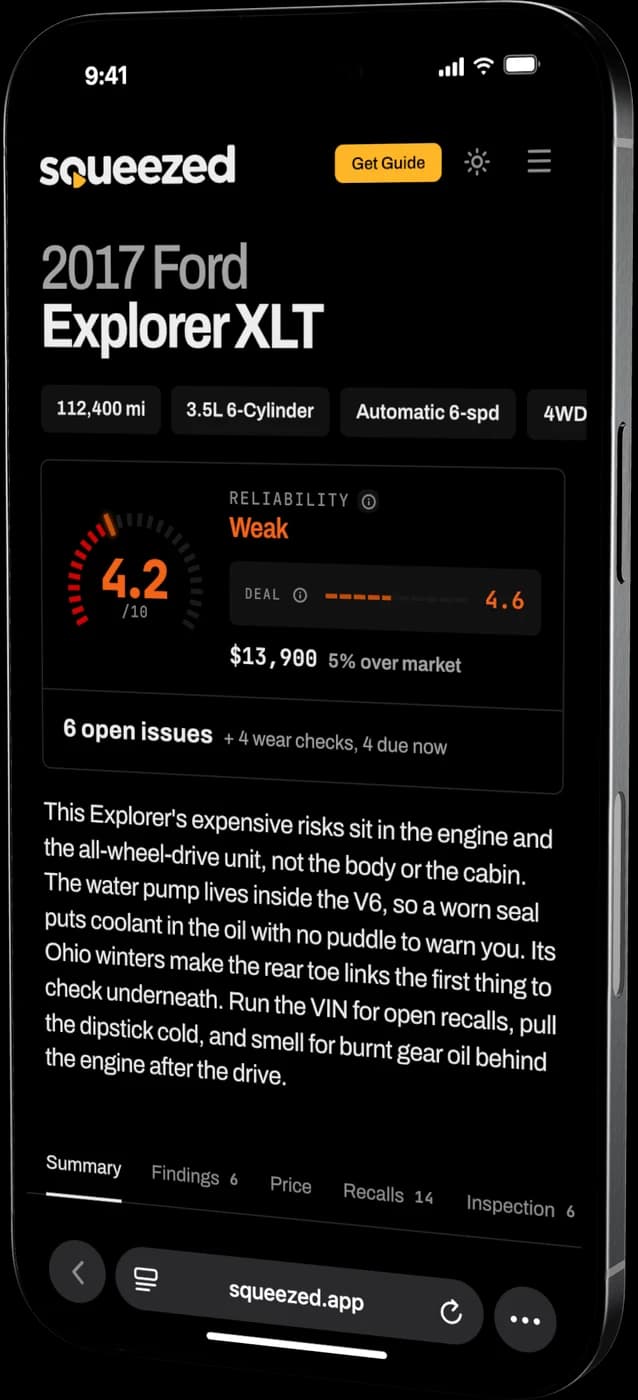
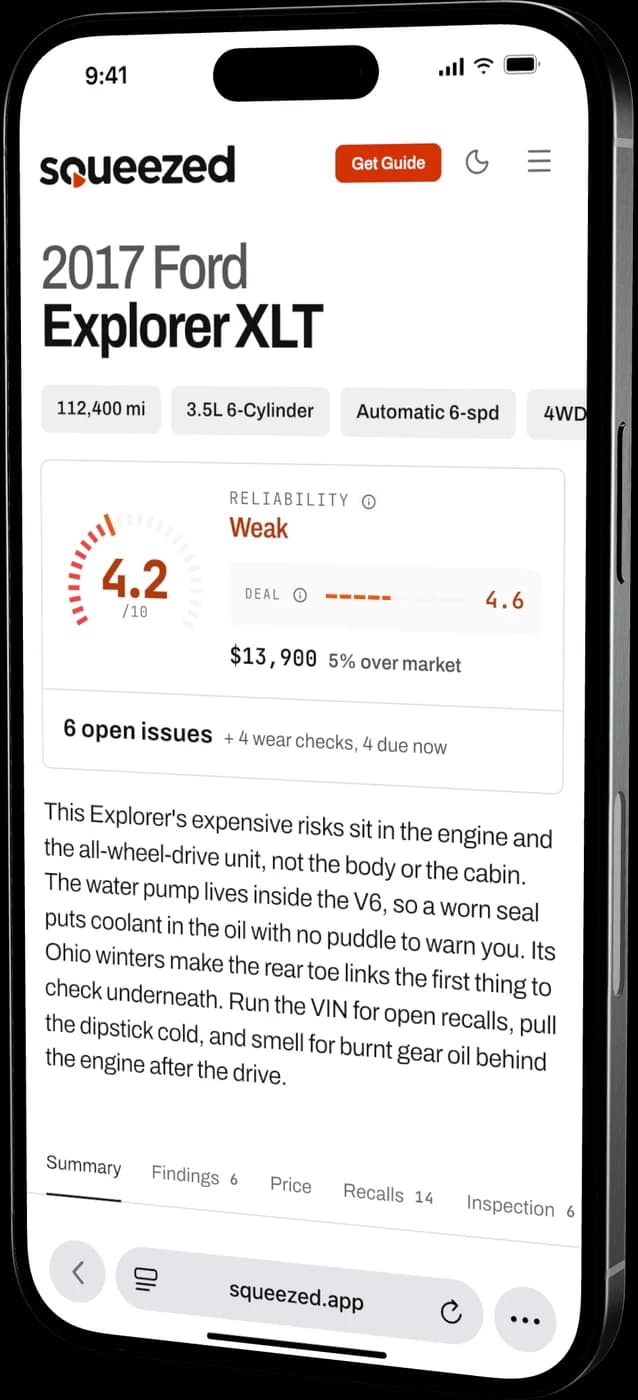
Squeezed is a buyer guide based on public data and industry patterns, not a mechanical inspection. Always get a professional pre-purchase inspection before you buy.